

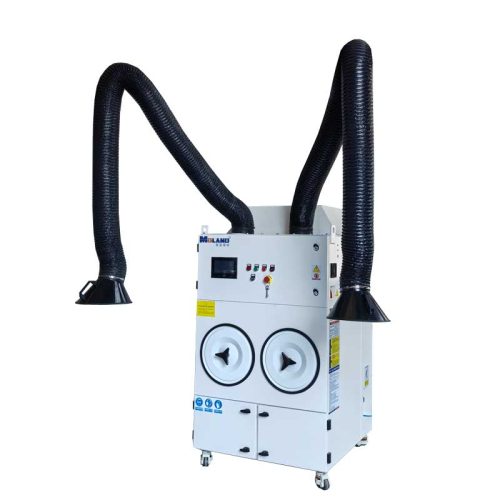
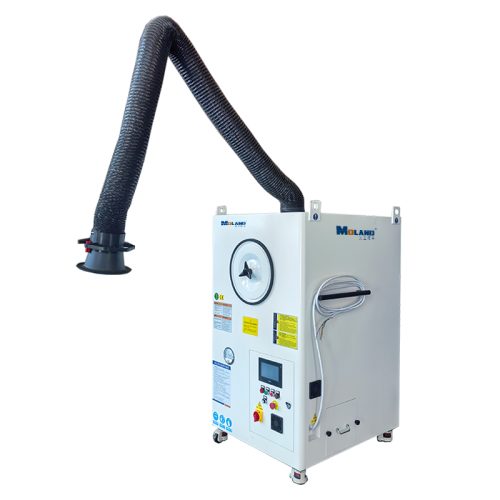
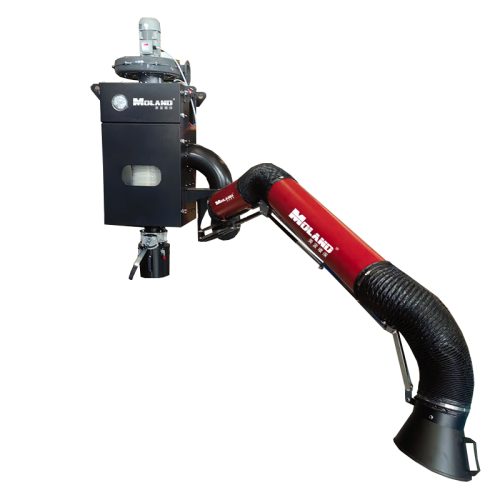
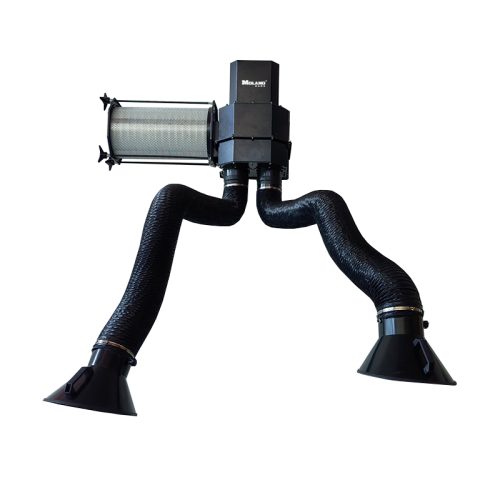



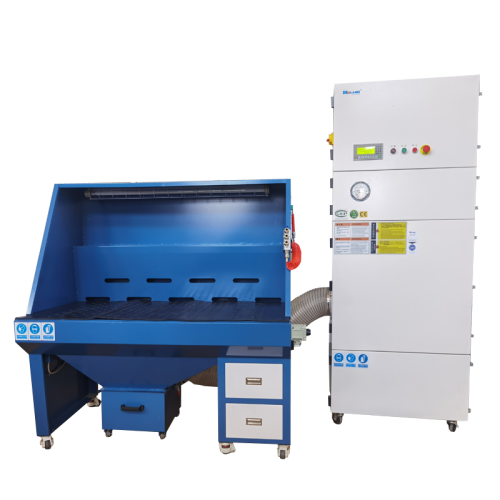
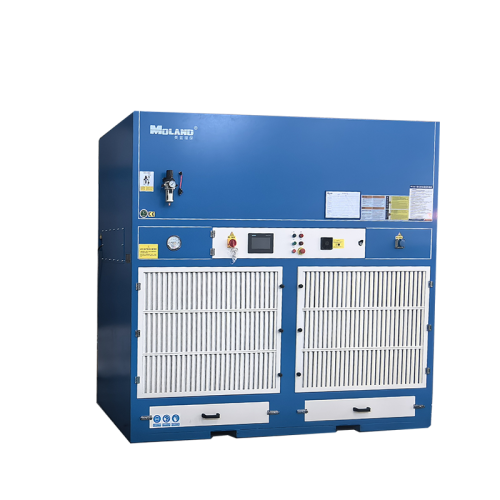
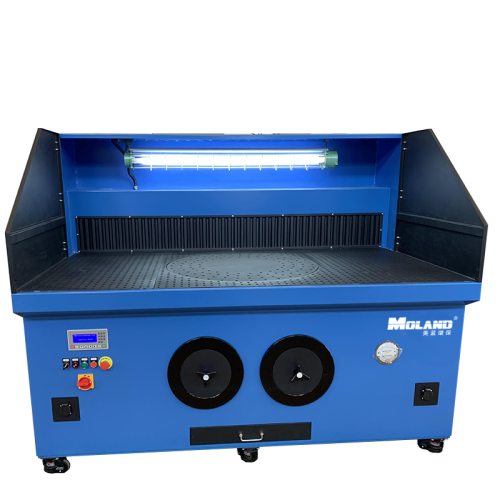

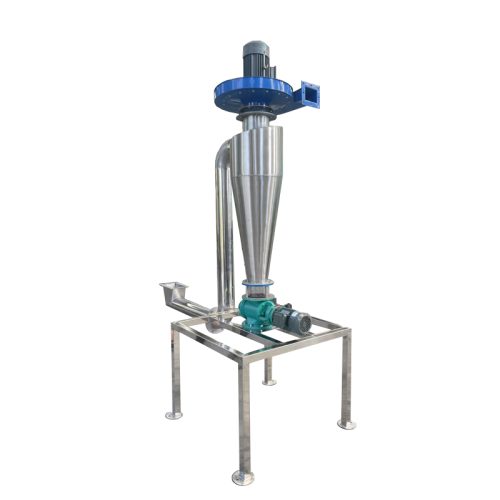

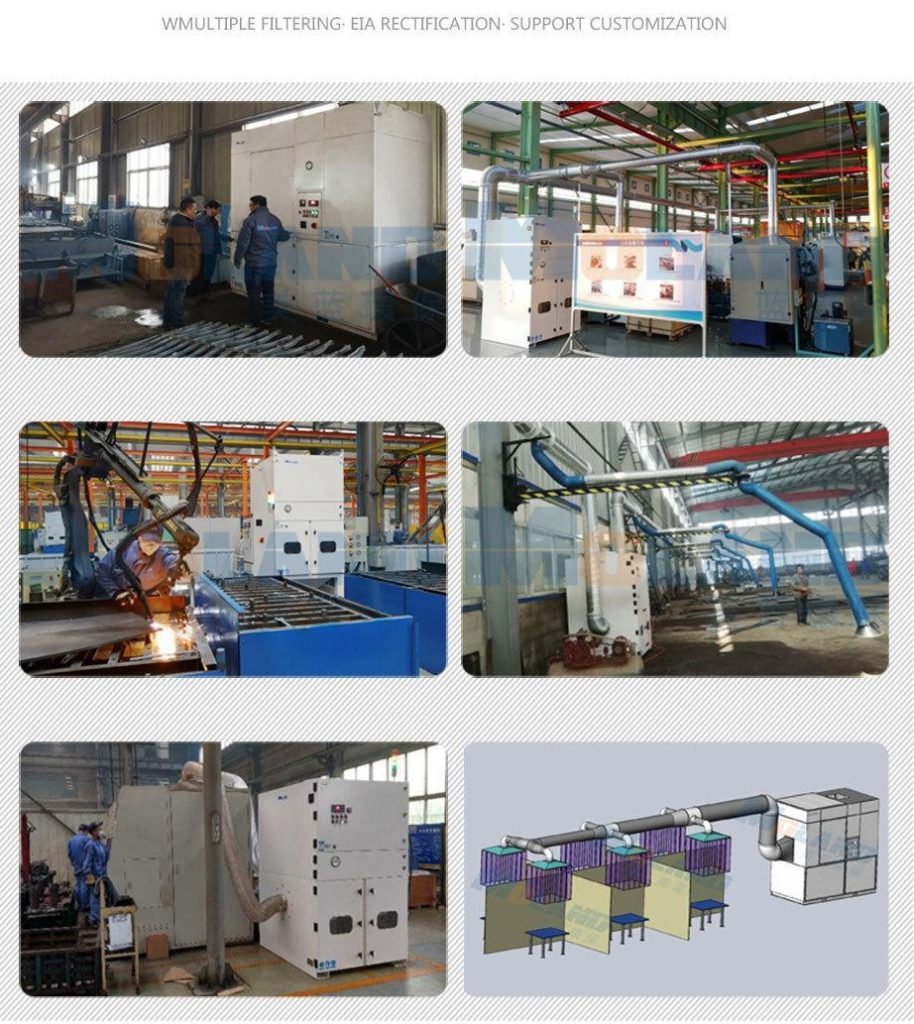
Welding Workstation Dust Collection. Metal fabrication workshops with multiple welding stations face a compounding air quality problem. Specifically, each welding point generates hazardous fumes containing manganese, iron oxide, and chromium compounds. Moreover, when several stations operate simultaneously, pollutant concentrations multiply rather than simply add. Therefore, individual portable extractors at each station often fail to maintain acceptable air quality across the entire workshop.
A centralized welding dust collection system addresses this challenge fundamentally differently. Rather than deploying standalone units at every workstation, one high-capacity host unit serves all extraction points through an engineered duct network. Consequently, maintenance concentrates on a single filtration system, and total equipment investment decreases significantly compared to purchasing multiple individual machines.
Furthermore, centralized systems enable intelligent airflow management. Specifically, variable frequency drives adjust fan speed based on how many stations are active. Therefore, energy consumption drops dramatically during partial-load operation. In addition, centralized filtration with PTFE membrane cartridges achieves 99.97% efficiency on particles down to 0.3 microns. As a result, filtered air meets indoor recirculation standards, eliminating the energy penalty of exhausting conditioned air outdoors.
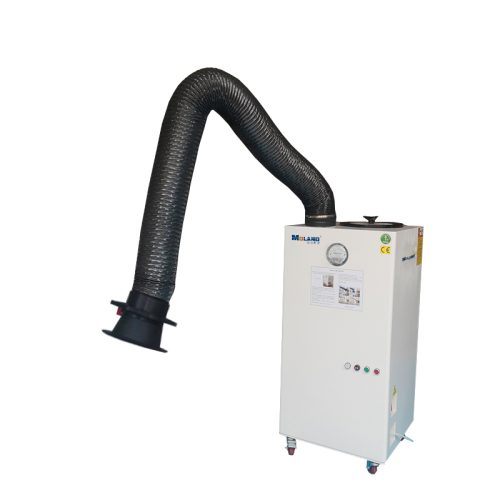
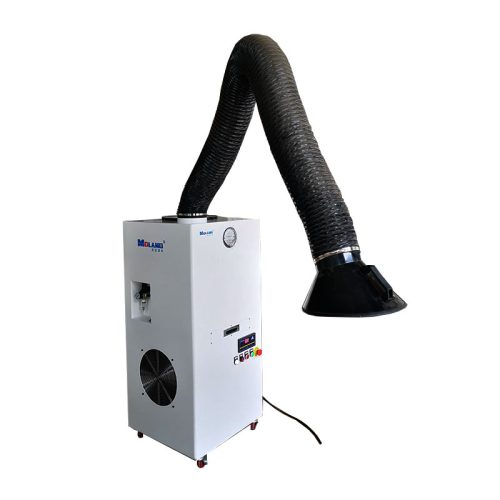
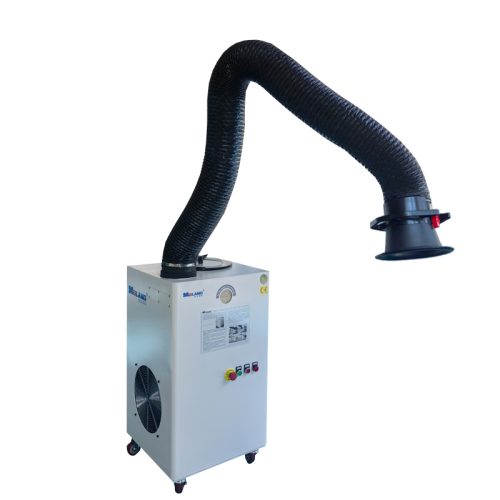
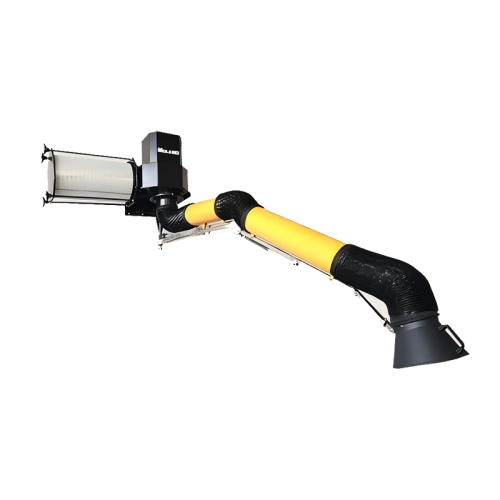
A centralized welding dust collection system is a multi-station fume extraction solution where a single host filtration unit connects to multiple welding workstations through a duct network. Specifically, each workstation features a capture device — such as a suction arm, suction hood, or enclosure hood — that captures fumes at the source. Furthermore, branch ducts converge into a main duct leading to the central filter unit. Consequently, all welding fumes from every connected station are filtered through one high-efficiency system.
This architecture differs fundamentally from portable or wall-mounted individual extractors. Specifically, individual units serve one station each. Therefore, a workshop with twenty welding points requires twenty separate machines, each with its own filter, motor, and maintenance schedule. However, a centralized system serves all twenty points with one host unit. As a result, total footprint, maintenance burden, and long-term operating costs decrease substantially.
The choice between centralized and individual systems depends on several practical factors. Specifically, the following conditions favor centralized welding dust collection:
Conversely, individual units may be more appropriate when welding stations are few, widely scattered, or frequently relocated. Moreover, very small workshops with two or three occasional welding points may find portable extractors more economical.
The first component is the fume capture device installed at each workstation. Specifically, the selection depends on the welding process and workpiece characteristics:
The second component is the duct network connecting all capture devices to the central unit. Specifically, duct design determines whether the system delivers balanced extraction at every station. Therefore, three engineering principles govern proper duct design:
First, transport velocity must remain between 10 and 18 meters per second throughout the duct system. Moreover, velocities below this range allow dust to deposit inside the pipes. Consequently, blockages develop over time, reducing airflow to downstream stations. Therefore, duct diameters must be calculated precisely based on the air volume at each branch and the main trunk.
Second, branch dampers must be installed at every extraction point. Moreover, these dampers allow operators to close inactive stations. Consequently, airflow redirects to active workstations, maintaining adequate capture velocity. Furthermore, damper positions enable system balancing during commissioning to ensure each station receives its designed air volume.
Third, duct routing must minimize bends and transitions. Specifically, every elbow, tee, and reducer adds static pressure resistance. Therefore, the fan must overcome this total resistance to deliver the required airflow. Moreover, excessive pressure losses increase energy consumption and may require a larger motor. Consequently, careful layout planning with gradual transitions and minimal fitting count optimizes both performance and cost.
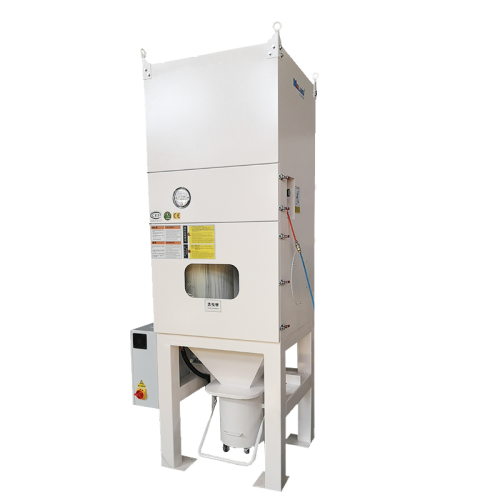
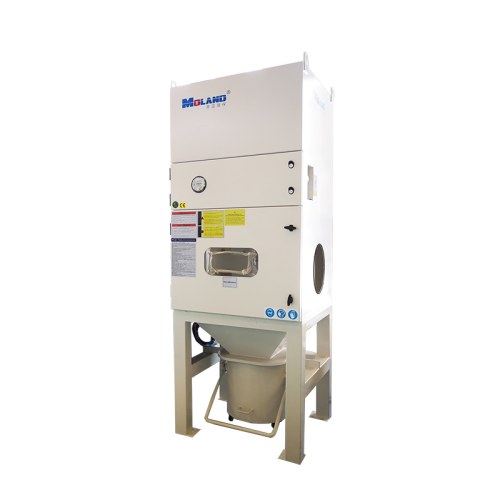
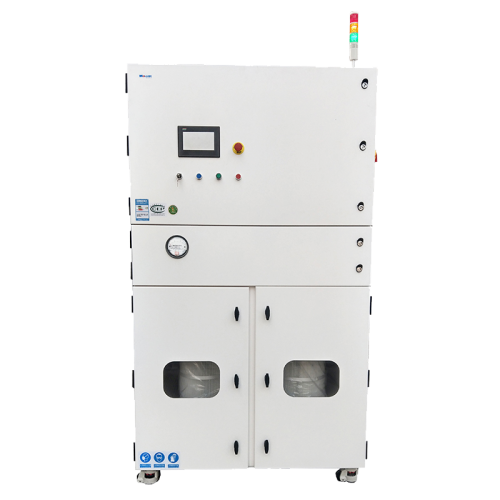
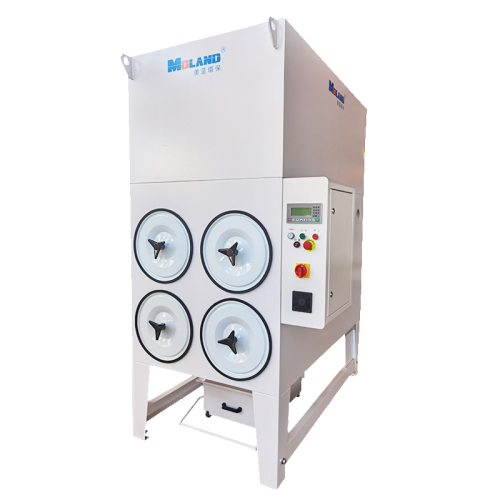
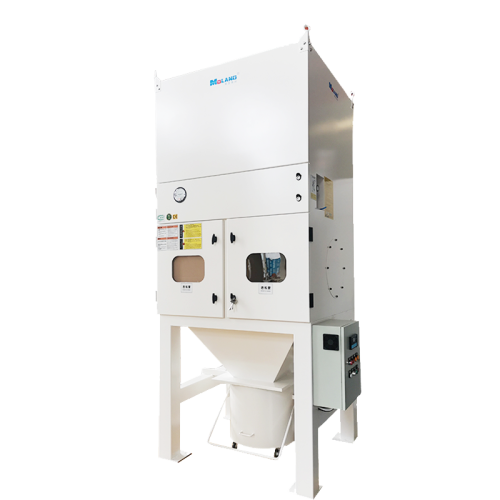
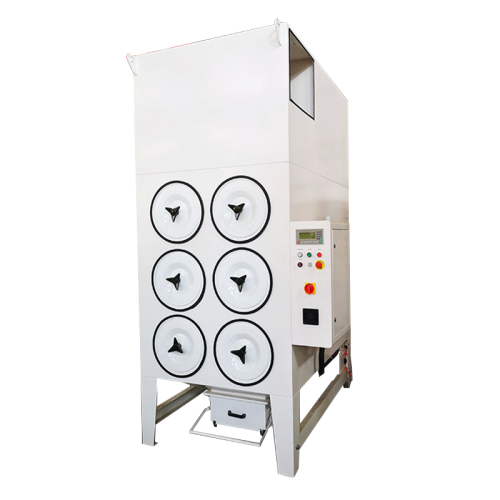
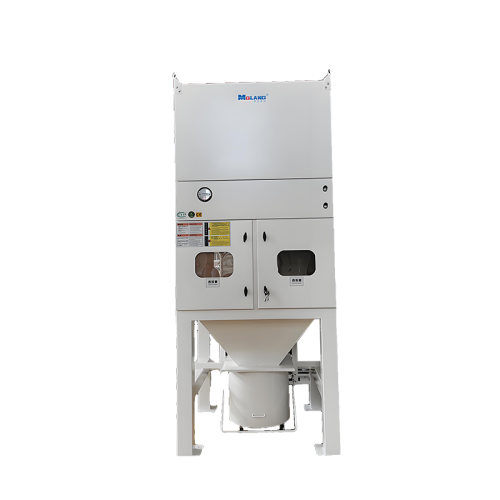
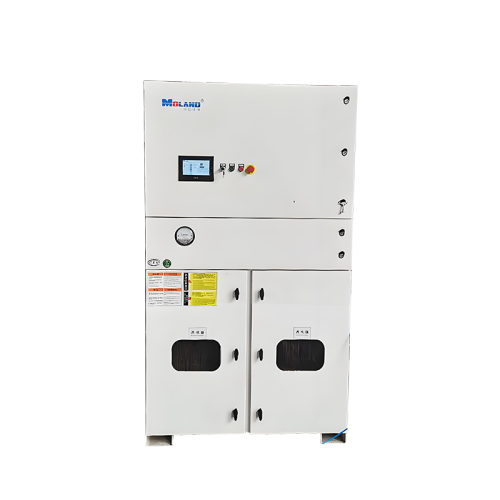
The third component is the central dust collector itself. Specifically, modern centralized welding dust collection systems employ PTFE membrane filter cartridges as the primary filtration media. Furthermore, these cartridges achieve 99.97% efficiency on particles down to 0.3 microns. Therefore, filtered air meets indoor recirculation standards without requiring external exhaust.
In addition, the filtration unit includes an automatic pulse-jet cleaning system. Specifically, compressed air pulses dislodge accumulated dust from the cartridge surface at regular intervals. Consequently, the cartridges maintain consistent airflow resistance over extended service periods. Moreover, PTFE membrane cartridges typically last three to five years under normal welding fume loads. As a result, replacement frequency and consumable costs remain low.
Furthermore, the filter housing design impacts workshop space utilization. Specifically, inclined cartridge collectors reduce the equipment footprint by 30 to 40 percent compared to traditional vertical designs. Therefore, the central unit fits into tight spaces between production lines without disrupting workflow.
No workshop operates all welding stations simultaneously at all times. Specifically, operators take breaks, change shifts, and move between tasks. Therefore, a centralized system designed for maximum load wastes significant energy when only a fraction of stations are active. Moreover, fan power consumption follows the cube law — power relates to the cube of rotational speed. Consequently, even small reductions in fan speed yield substantial energy savings.
A variable frequency drive integrated with pressure sensing solves the partial-load challenge automatically. Specifically, each extraction branch includes a damper that closes when the station is inactive. Furthermore, a pressure sensor monitors the main duct continuously. When dampers close, duct pressure rises. Consequently, the sensor signals the VFD to reduce fan speed. As a result, the motor consumes only the energy required for the current number of active stations.
Conversely, when additional stations come online, duct pressure drops. Therefore, the sensor triggers the VFD to increase fan speed. Moreover, this response occurs within seconds, maintaining consistent suction at all active workstations. Consequently, operators never experience reduced capture performance regardless of how many stations are running.
The energy savings from VFD control are significant. Specifically, reducing fan speed by 20 percent cuts power consumption by approximately 50 percent. Furthermore, reducing speed by 30 percent saves roughly 66 percent. In a typical workshop where only 50 to 70 percent of stations operate at any given time, average energy savings range from 40 to 60 percent compared to constant-speed operation.
Additionally, lower fan speed reduces mechanical wear on bearings, belts, and impellers. Therefore, maintenance intervals extend. Furthermore, quieter operation at reduced speed improves the workshop environment. As a result, both operating costs and worker comfort improve simultaneously.
Proper duct diameter ensures adequate transport velocity without excessive pressure loss. Specifically, the following reference matches common air volumes to appropriate duct sizes:
表格
| Air Volume (m³/h) | Duct Diameter (mm) | Transport Velocity (m/s) |
|---|---|---|
| 2,000 | φ200 | 17.7 |
| 3,000 | φ250 | 17.0 |
| 5,000 | φ315 | 17.8 |
| 8,000 | φ400 | 17.7 |
| 12,000 | φ500 | 17.0 |
| 18,000 | φ630 | 16.0 |
Therefore, duct diameters are selected to maintain transport velocity within the 10 to 18 m/s range. Moreover, main trunk diameters increase progressively as branch ducts converge. Consequently, velocity remains adequate throughout the entire network.
表格
| Parameter | Centralized System | Individual Units |
|---|---|---|
| Number of machines | 1 host unit | 1 per station |
| Floor space | Compact, one location | Distributed across workshop |
| Maintenance focus | Single system | Multiple independent units |
| Filter replacement | One set of cartridges | One set per unit |
| Energy efficiency | VFD adjusts to active stations | Each unit runs at fixed speed |
| Duct installation | Required | Not required |
| Initial investment | Lower per station at 5+ stations | Higher per station |
| Flexibility for station relocation | Requires duct modification | Simply move the unit |
| Noise | Centralized at one location | Noise at each station |
| Filtration efficiency | PTFE cartridges, 99.97% | Varies by unit type |
Therefore, centralized systems deliver superior economics and performance when the number of welding stations exceeds approximately five. Moreover, the advantages grow as station count increases. Conversely, individual units offer better flexibility for workshops with few or mobile stations.
A Sino-US joint venture automotive parts manufacturer operated over 60 manual welding stations and more than 10 robotic welding workstations across two workshops. Therefore, fugitive welding fumes created serious air quality and compliance issues. Moreover, the sheer number of emission points made standalone collectors impractical. Consequently, Meilan delivered two centralized dust extraction systems — one per workshop — to achieve full-coverage fume control.
Each workshop received a dedicated inclined cartridge dust collector. Specifically, the compact housing design reduced floor space by 30 to 40 percent compared to vertical cartridge collectors. Furthermore, manual welding stations used flexible suction arms with 360-degree rotation. Therefore, operators positioned capture hoods directly above each weld joint. Moreover, robotic welding workstations employed fixed enclosure hoods for consistent fume capture.
The duct network connected all 70+ extraction points through galvanized steel piping. Furthermore, each branch included a manual damper for station isolation. Meanwhile, duct diameters were calculated to maintain 10 to 18 m/s transport velocity. Consequently, dust did not deposit inside the pipes.
The Siemens variable frequency drive adjusted fan speed automatically based on duct pressure sensing. Specifically, when operators closed dampers at inactive stations, the VFD reduced motor speed proportionally. Consequently, the system consumed only the energy required for active stations. Moreover, this intelligent control reduced average energy consumption by approximately 50 percent compared to constant-speed operation.
A Shenyang manufacturing facility faced air quality challenges across two distinct welding zones. Specifically, the first zone housed six manual welding stations handling oversized workpieces up to 6.5 meters in length. Moreover, the second zone operated three carbon arc gouging stations generating significantly heavier fume loads than standard welding.
Meilan proposed a two-pronged centralized strategy. Specifically, one 8,000 m³/h system served the six manual welding stations. Furthermore, each manual station was equipped with a 4-meter crossbeam paired with a 3-meter articulated suction arm. Therefore, the combined reach covered the entire 6.5-meter workpiece envelope without repositioning.
For the carbon arc gouging zone, three independent 6,000 m³/h units served the three stations individually. Moreover, each station featured a large-format side-suction hood measuring 2.2 m × 0.8 m × 1.7 m. Consequently, heavy particulate emissions were intercepted at the source before dispersing.
Moland designs and manufactures centralized welding dust collection systems tailored to each workshop layout. Specifically, key features include:
How much could your workshop save in energy, maintenance, and floor space by switching from scattered individual units to a centralized welding dust collection system?