

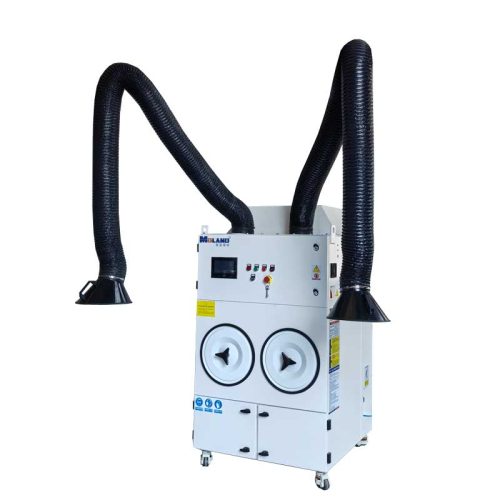
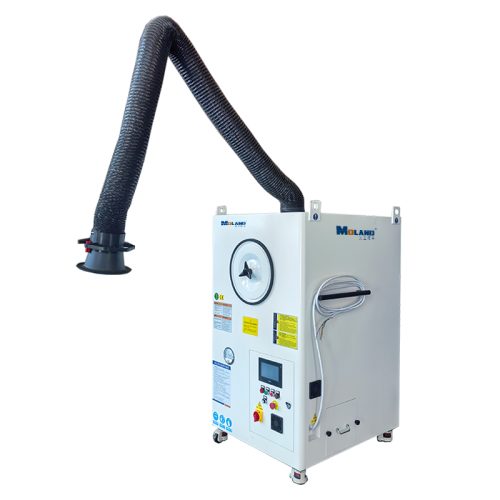
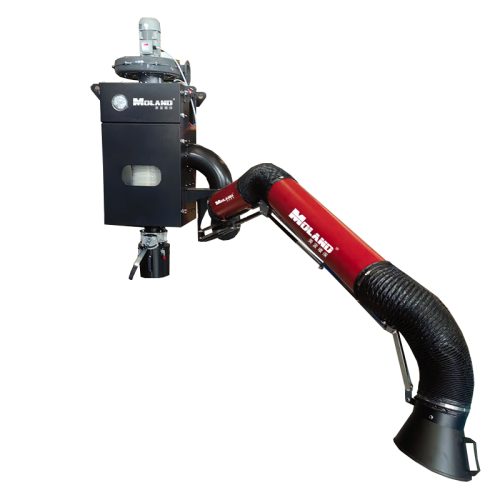
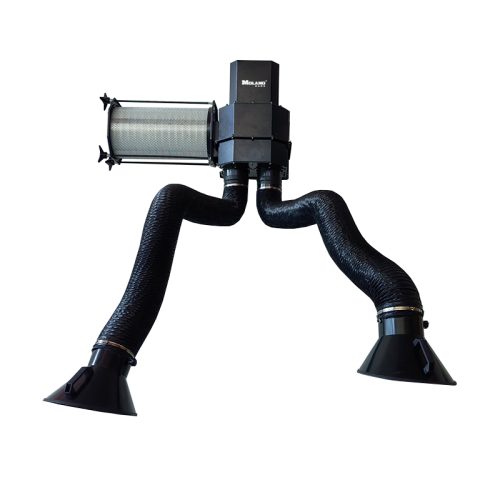
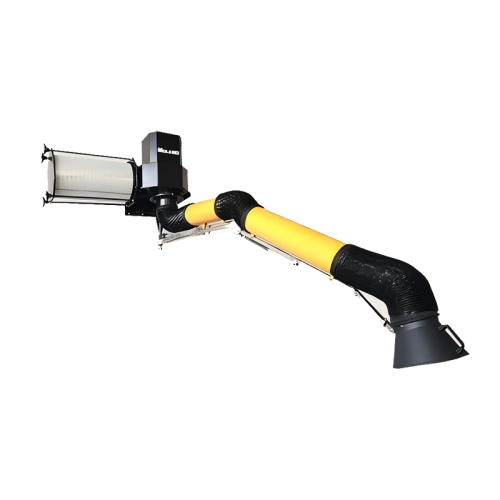


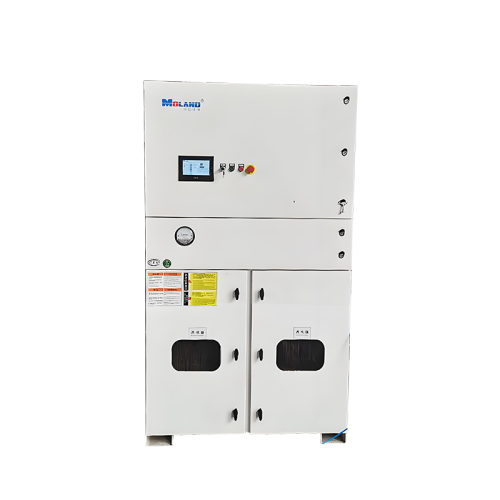

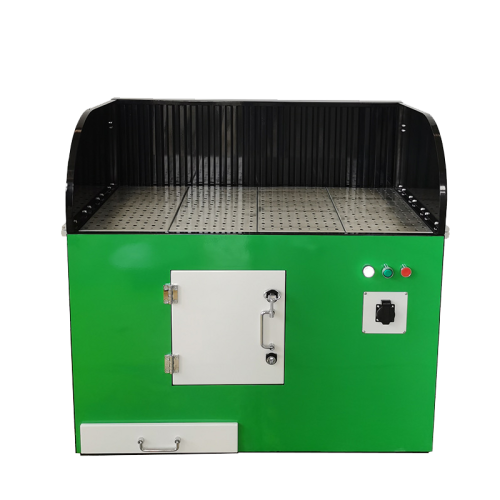
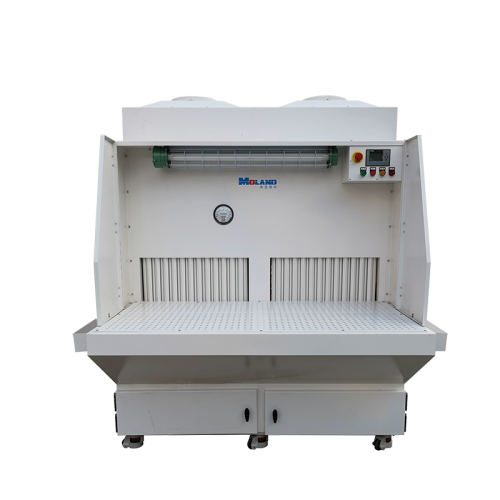
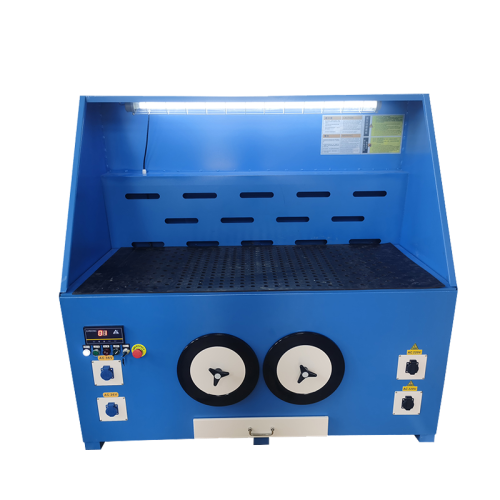
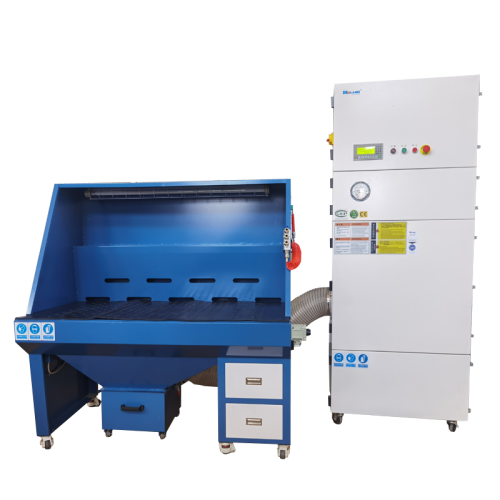
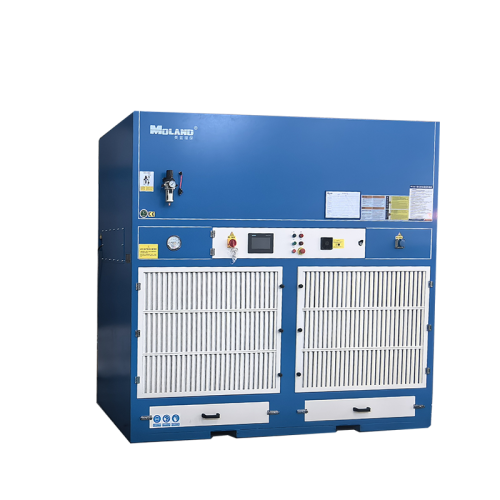
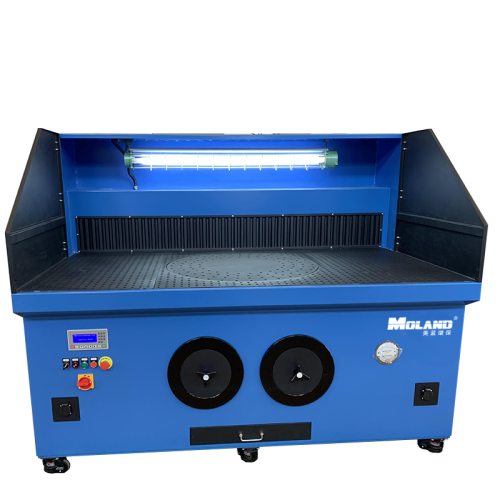

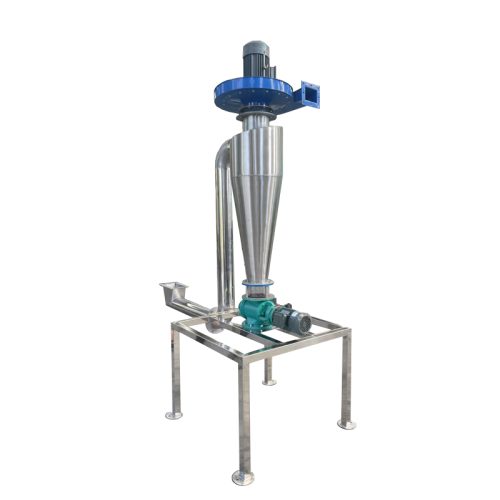

Welding training center collection. Welding training has become increasingly common in vocational schools and technical institutions. However, welding fumes and dust generated during training sessions spread freely across the workshop. Therefore, they seriously threaten the health of both instructors and trainees. Moreover, multiple trainees weld simultaneously in close proximity. Consequently, pollutant concentration escalates rapidly without effective extraction. As a result, many training institutions struggle to find a reliable welding fume extraction system for training facilities that addresses both air quality and safety concerns.
A welding training center demands more than a simple dust collector. Specifically, it requires an integrated approach covering fume capture, air purification, fire protection, illumination, gas supply, and acoustic insulation. Furthermore, each training booth operates independently. Therefore, the system must adapt dynamically to variable workloads while maintaining consistent extraction performance.
Keywords: welding training center dust collection, welding fume extraction for training facilities, PTFE membrane filter cartridge for welding fume, welding booth ventilation system, rock wool welding partition, vocational welding workshop ventilation
Unlike industrial workshops, training centers place multiple welding stations within a single room. Therefore, fume density accumulates much faster than in open factory floors. Moreover, trainees are often beginners who lack proper fume avoidance techniques. Consequently, they inhale higher concentrations of hazardous particles. Specifically, welding fumes contain manganese, iron oxide, and chromium compounds. Furthermore, prolonged exposure to these substances causes respiratory diseases and metal fume fever.
In addition, training environments require clear visibility for instruction and safety supervision. However, dispersed fumes obscure the workspace. Therefore, effective welding training center dust collection is essential for both health compliance and training quality.
Welding generates intense noise and radiant heat. Therefore, adjacent booths interfere with each other without proper isolation. Moreover, excessive noise prevents instructors from communicating clearly with trainees. Consequently, partition walls with acoustic insulation become a structural necessity rather than an optional upgrade.
Meanwhile, grinding and cutting activities produce sparks and hot particles. Therefore, partition materials must also resist ignition and flame spread. As a result, rock wool panels serve as the ideal partition material — combining sound absorption, thermal insulation, and fire resistance in one solution.
Meilan designed a comprehensive system specifically for welding training institutions. Specifically, the integrated solution comprises seven functional modules:
Therefore, training institutions receive a turnkey solution rather than assembling components from multiple vendors. Furthermore, integrated design ensures that all modules operate cohesively without interface conflicts.
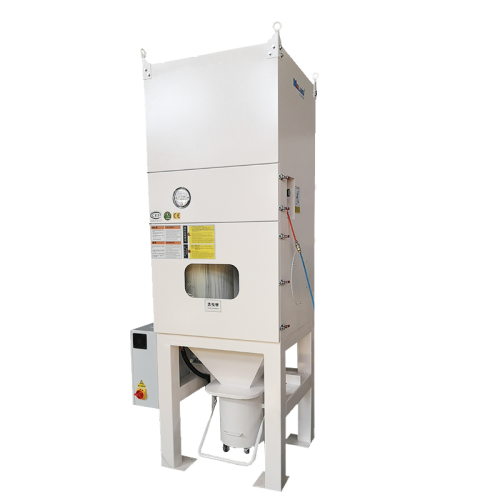
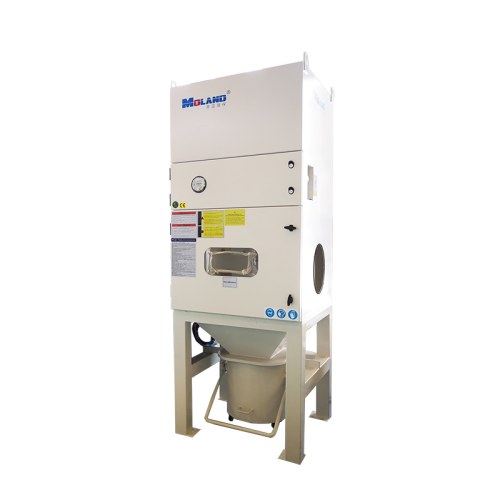
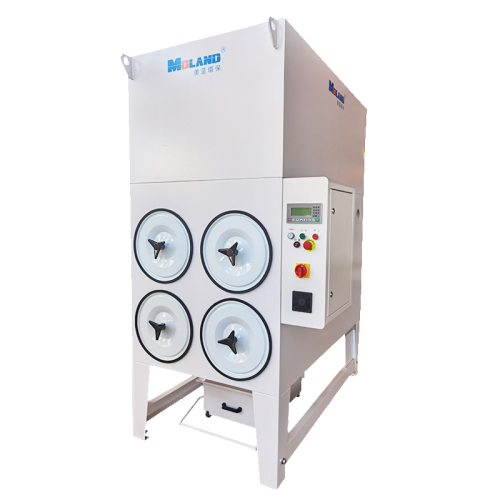
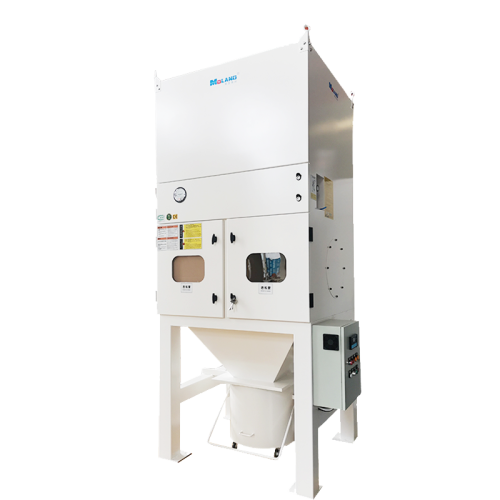
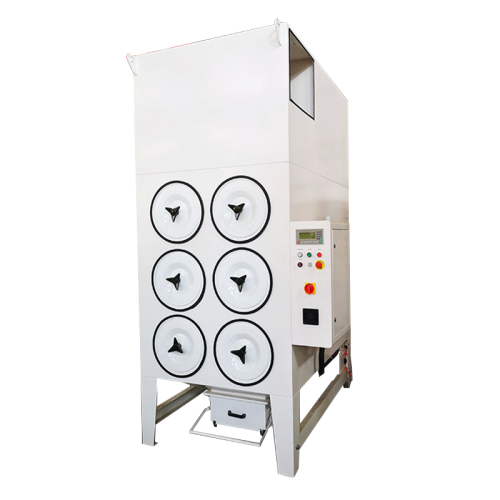
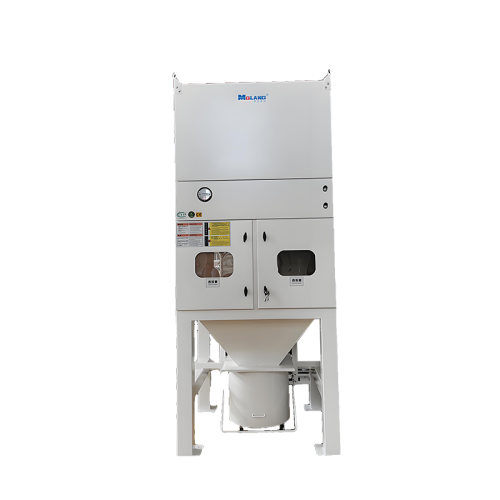
The core purification unit employs PTFE membrane polyester fiber flame-retardant filter cartridges. Specifically, this filtration media achieves 99.97% efficiency on particles as small as 0.3 micrometers. Moreover, the PTFE membrane surface prevents fine dust from embedding into the fiber matrix. Consequently, the cartridges maintain consistent airflow over extended service periods.
In addition, the flame-retardant substrate adds a critical safety layer. Specifically, sparks and hot particles entering the filter housing encounter non-combustible material. Therefore, the risk of filter ignition during welding operations drops significantly. Furthermore, PTFE membrane cartridges typically last three to five years under normal welding fume loads. As a result, training facilities benefit from low maintenance frequency and predictable operating costs.
Each welding training booth utilizes premium rock wool flame-retardant panels. Specifically, these panels deliver three essential performance characteristics:
Furthermore, the panels present a clean, professional appearance. Therefore, the training facility maintains a high standard of visual presentation. Meanwhile, the robust construction delivers a service life of 10 to 15 years. As a result, the total cost of ownership remains competitive despite the initial investment.
Every training booth functions as a self-contained welding station. Specifically, each booth includes the following integrated components:
Therefore, each booth operates independently while connecting to the centralized extraction system. Moreover, the modular design allows institutions to add or relocate booths as enrollment changes.
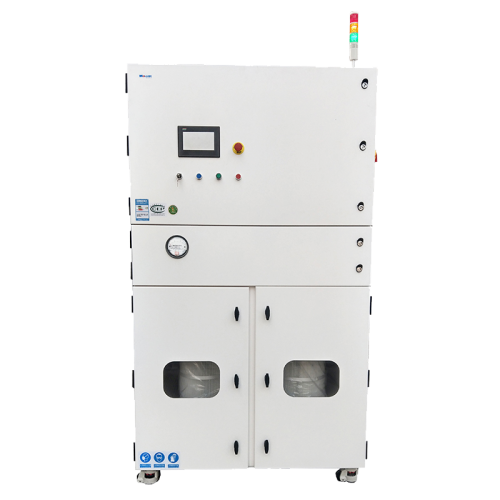
Not all training booths operate simultaneously. Therefore, running the extraction fan at full speed wastes significant energy. However, Meilan's intelligent control system solves this problem automatically.
Specifically, each booth features an independent control valve. Meanwhile, a pressure sensor monitors the main duct continuously. When a trainee closes the valve at an inactive booth, the duct pressure rises. Consequently, the sensor detects this change and signals the variable frequency drive. The VFD then reduces motor speed to match the current airflow demand.
Conversely, when additional booths come online, duct pressure drops. Therefore, the sensor triggers the VFD to increase fan speed. As a result, the system maintains consistent suction at all active stations while consuming only the energy required for the current workload.
The energy savings are substantial. Specifically, fan power consumption follows the cube law — power relates to the cube of rotational speed. Therefore, reducing fan speed by 20 percent cuts energy use by approximately 50 percent. Moreover, a typical training schedule involves four to six active booths out of ten to twelve total. Consequently, average energy consumption drops significantly compared to constant-speed operation.
In addition, lower fan speed reduces mechanical wear on bearings and belts. Therefore, maintenance intervals extend. Furthermore, quieter operation at reduced speed creates a better training environment. As a result, both operating costs and training quality improve simultaneously.
Assembling a welding training facility from multiple vendors creates coordination challenges. Specifically, interface issues between fume extraction, electrical, gas, and fire systems often cause delays and rework. However, Meilan delivers all seven modules as an integrated package. Therefore, a single point of accountability covers the entire system. Moreover, factory pre-assembly and testing ensure that all components fit correctly before shipment. Consequently, on-site installation proceeds smoothly and on schedule.
Effective fume extraction directly impacts training quality. Specifically, clean air improves trainee focus and reduces fatigue. Moreover, clear visibility enables instructors to demonstrate techniques without fume interference. Furthermore, compliance with occupational health regulations protects the institution from liability. Therefore, investing in a proper welding booth ventilation system safeguards both people and organizational reputation.
The combination of PTFE membrane cartridges and rock wool construction ensures durability. Specifically, filter cartridges last three to five years, and partition panels serve 10 to 15 years. Therefore, the total cost of ownership remains manageable. Moreover, smart monitoring provides early warnings for filter saturation and system faults. Consequently, maintenance teams can plan interventions before performance degrades.
Welding training centers face unique challenges — high-density fume generation, noise interference, fire hazards, and the need for integrated booth systems. Therefore, a purpose-built welding training center dust collection solution must address all these factors simultaneously. Meilan's integrated system combines PTFE membrane filtration, rock wool acoustic partitions, independent booth controls, and smart VFD energy management into one turnkey package. Furthermore, each module is designed to work cohesively, ensuring reliable performance and long service life.
Are you planning a welding training facility and need a complete fume extraction and booth system that meets health, safety, and energy standards?