




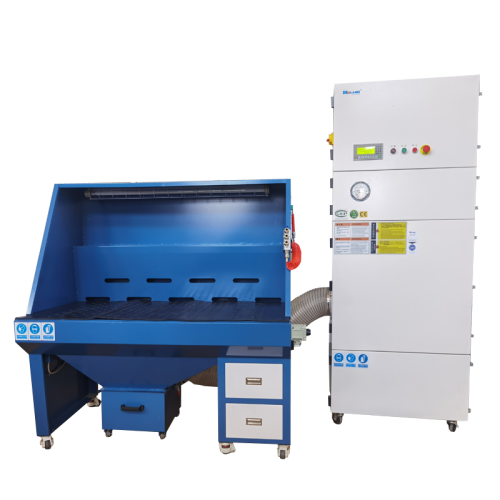
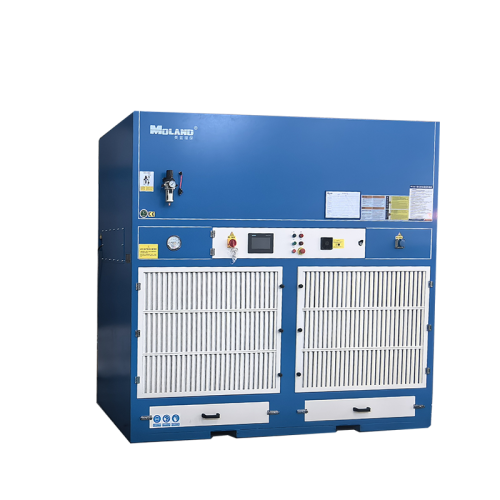
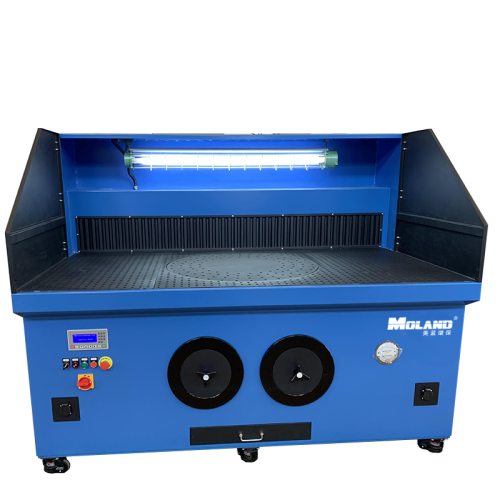

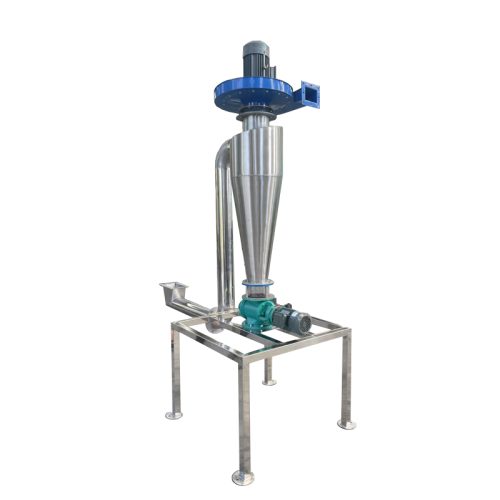
Heavy-Duty Welding with Smart Design. Longgong (Fujian) Machinery Co., Ltd. operates two high-output welding workshops. One for mechanical fabrication and another for hydraulic components. Both facilities face a common enemy: heavy welding fumes generated across multiple stations simultaneously. However, their workflows differ significantly. The mechanical workshop handles oversized workpieces that require overhead crane hoisting, while the hydraulic workshop runs a mix of manual welding and automated welding stations. A one-size-fits-all approach would fail here. Each workshop needed a dust collection strategy tailored to its specific process constraints.
After an on-site technical assessment, we designed two distinct centralized extraction systems — each optimized for the layout, workflow, and fume characteristics of its respective workshop.
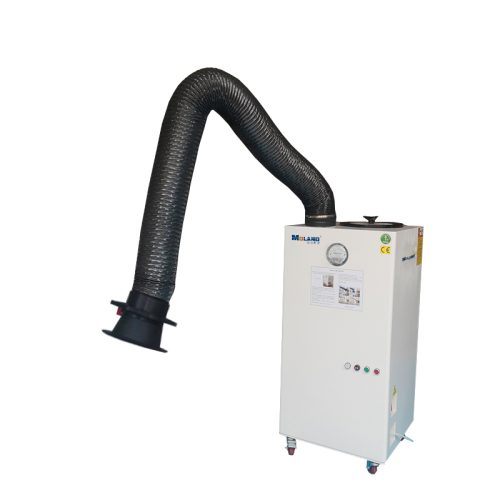
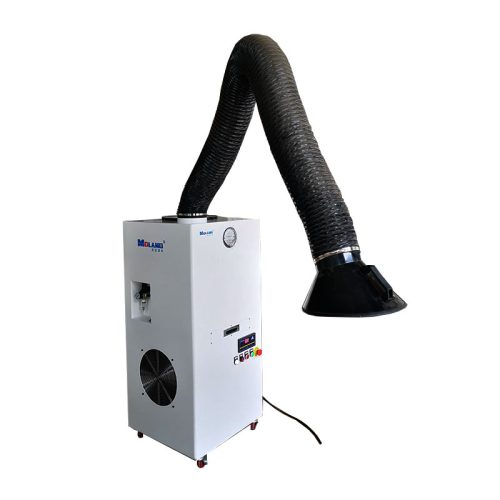
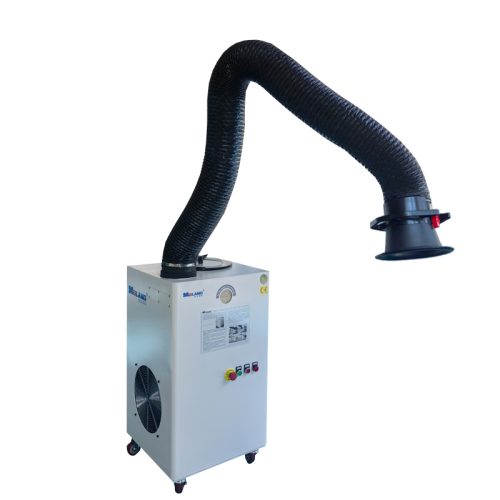
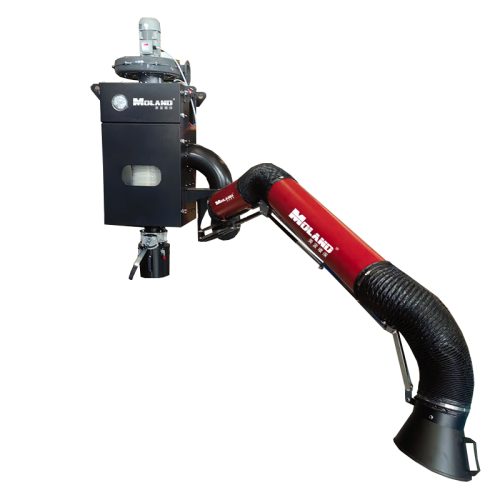
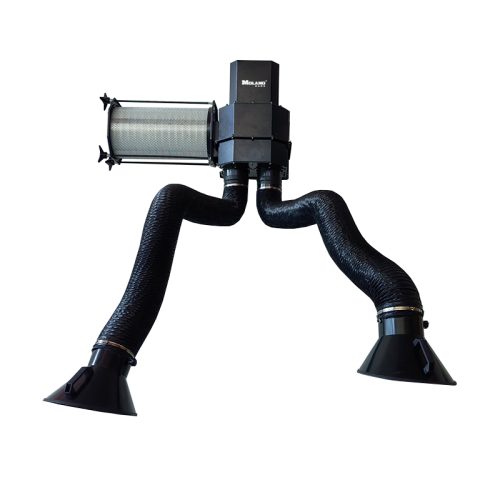
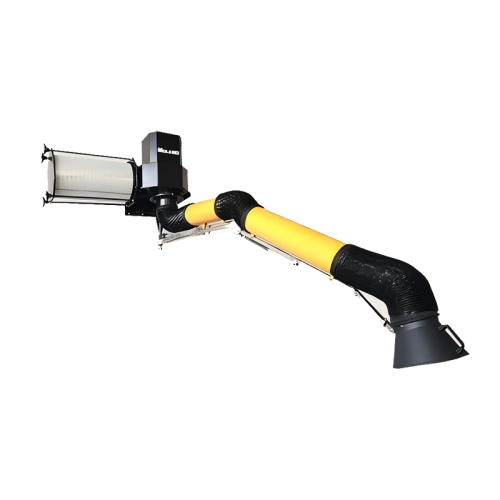
The mechanical workshop houses six welding stations processing large, heavy components. These workpieces must be hoisted by overhead cranes, making fixed hoods or suction arms impractical . Consequently they would block crane movement and create safety hazards. Our solution: telescopic dust collection hoods that retract vertically when the crane operates and extend downward to capture fumes during welding. This design keeps the workspace fully accessible while maintaining effective extraction.
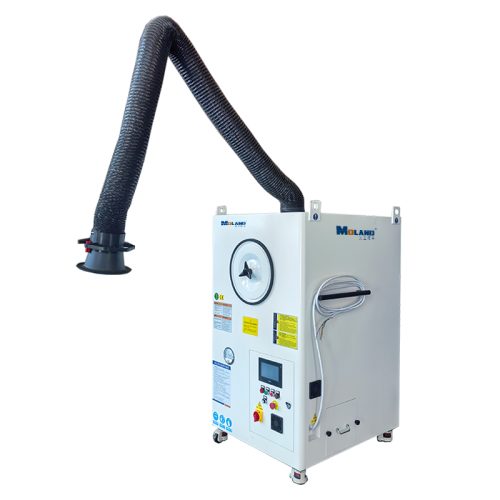
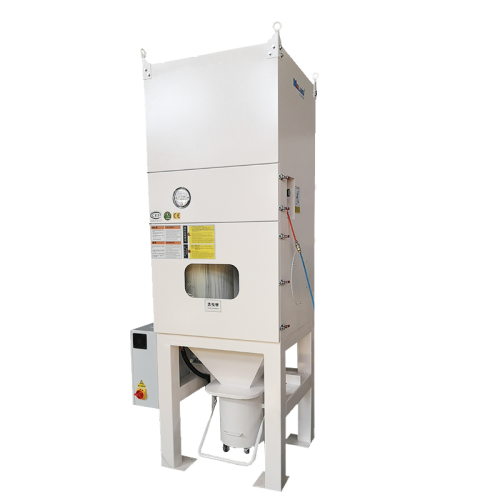
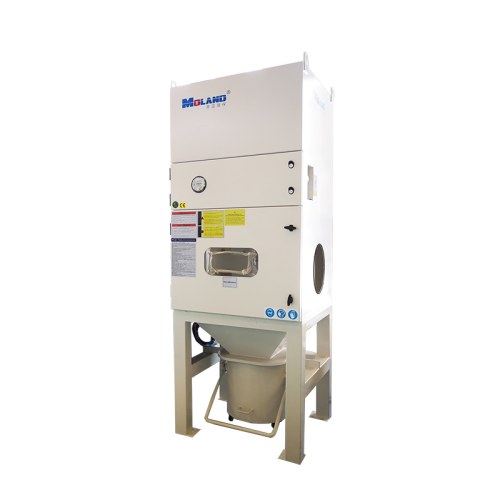
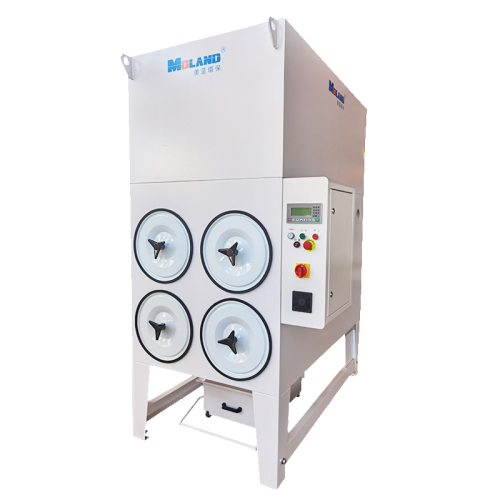
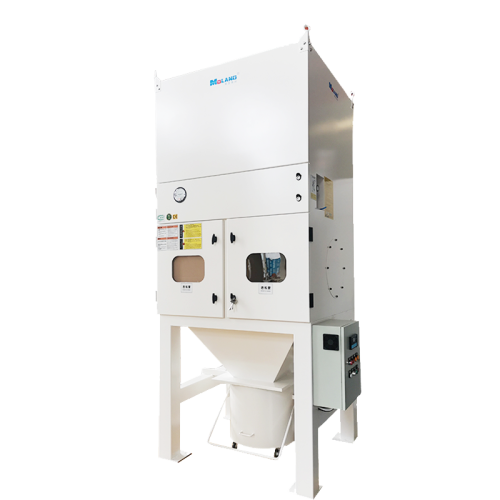
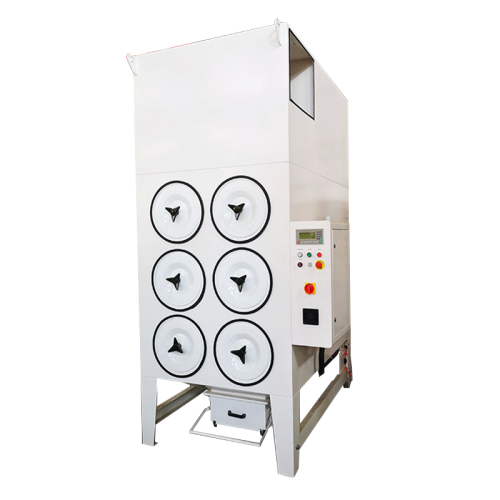
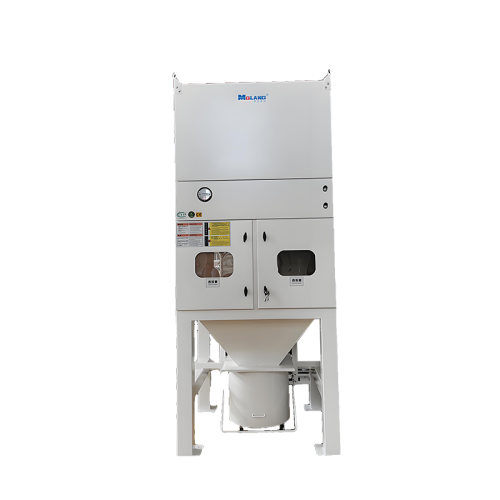
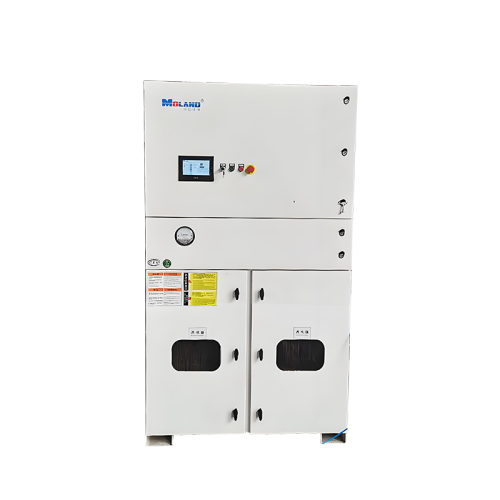
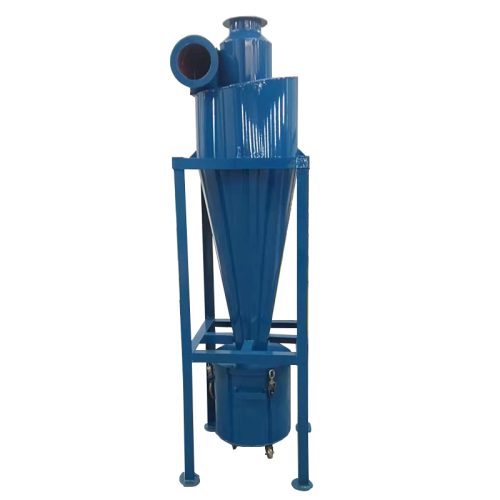
Since the six stations are positioned relatively close together, we deployed two 11 kW dust collection units, each serving three stations. This shared configuration reduces equipment costs without sacrificing performance, as the clustered layout allows one unit to maintain strong suction across three adjacent stations.
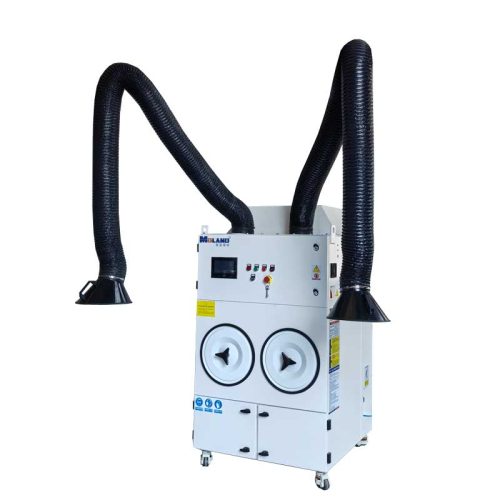
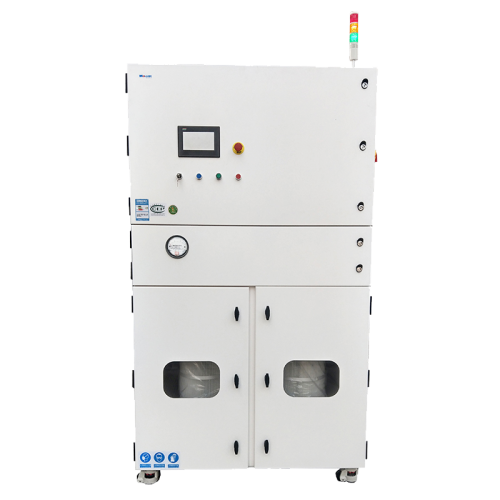
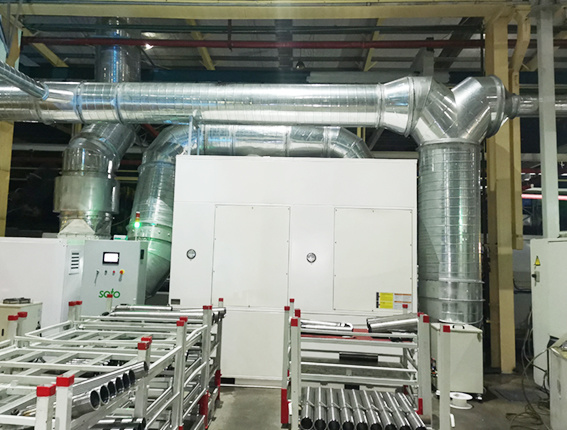
The hydraulic workshop runs eight workstations in total — five manual welding positions plus three automated welding stations. Despite the different welding methods, all eight stations feed into a single centralized dust collection unit. This unified approach works because the workshop has a compact footprint and consistent fume output across stations. One main unit simplifies installation, reduces maintenance points, and lowers total energy consumption compared to multiple smaller units.
表格
| Parameter | Mechanical Workshop | Hydraulic Workshop |
|---|---|---|
| Stations | 6 (manual welding) | 8 (5 manual + 3 automated) |
| System configuration | 2 × 11 kW units | 1 main unit |
| Collection method | Telescopic dust hoods | Centralized extraction |
| Key design driver | Crane hoisting clearance | Compact multi-station layout |
During installation, our team encountered an unexpected challenge — the material storage warehouse was located far from the construction workshop, making the transport of pipes, fittings, and equipment extremely time-consuming. Rather than accepting the delay, our installation crew designed and built a makeshift material cart on site, dramatically speeding up material handling and keeping the project on schedule. This kind of on-the-spot problem-solving is what sets a professional installation team apart from mere equipment suppliers.
The entire system was installed on time, passed quality inspection, and successfully completed client acceptance — a testament to both the engineering design and the execution team's adaptability.
First, the telescopic hood design eliminates the conflict between fume extraction and crane operation. Large workpieces move freely overhead, and fumes are captured the moment welding resumes — no compromises on either safety or productivity. Second, the shared-unit configuration in the mechanical workshop cuts capital expenditure while maintaining extraction performance, thanks to the clustered station layout. Third, the single-unit approach in the hydraulic workshop minimizes long-term maintenance and energy costs, with one system to monitor instead of multiple independent units.
The Longgong Fujian project demonstrates how customized system design — from hood selection to unit allocation — directly impacts both installation efficiency and long-term performance. Two workshops, two different strategies, one consistent result: cleaner air, compliant operations, and satisfied clients.
Managing welding fumes across multiple workshops with different processes? Contact our engineering team for a site-specific solution. Free assessment, tailored design, professional installation — from concept to acceptance.