






Centralized Dust Collection Listed companies operate under a different set of pressures than private manufacturers. Specifically, they face regulatory scrutiny from securities commissions, environmental audits from third-party assessors, and public expectations from shareholders and local communities. Moreover, Environmental, Social, and Governance (ESG) ratings increasingly influence stock valuations and institutional investment decisions. Consequently, dust collection systems at listed enterprises must exceed minimum compliance thresholds — they must demonstrate measurable, auditable, and reportable performance.
For workshops where welding and grinding operations coexist, the challenge intensifies. Specifically, welding generates fine sub-micron fume particles containing manganese, chromium, and iron oxide. Meanwhile, grinding produces coarse abrasive dust ranging from 10 to 500 microns — including metal particles, grinding wheel debris, and workpiece scale. Furthermore, these two dust types have fundamentally different characteristics: welding fume requires high-efficiency membrane filtration, while grinding dust demands high-volume coarse particle separation. Therefore, a single unified dust collection system must handle both dust profiles simultaneously without compromising performance on either front.
This case study demonstrates how MoLAND designed and deployed a centralized dust collection system for a listed heavy machinery manufacturer — one that serves welding and grinding operations across multiple production lines while meeting the elevated compliance, reporting, and sustainability standards that public companies require.
The customer is a Shanghai Stock Exchange-listed heavy machinery manufacturer specializing in construction equipment, mining machinery, and industrial cranes. Specifically, the company operates three major production facilities in eastern China, employs over 4,000 workers, and generates annual revenue exceeding ¥3 billion. Moreover, as a publicly traded entity, the company is subject to annual environmental audits, ESG reporting obligations, and workplace safety inspections by multiple regulatory bodies.
The facility targeted for this project houses four distinct production zones under one roof:
| Zone | Primary Process | Workstation Count | Operating Shifts |
|---|---|---|---|
| Zone A | Manual MIG/MAG welding (structural frames) | 16 stations | 2 shifts/day |
| Zone B | Robotic welding (boom arms, bucket frames) | 8 cells | 2 shifts/day |
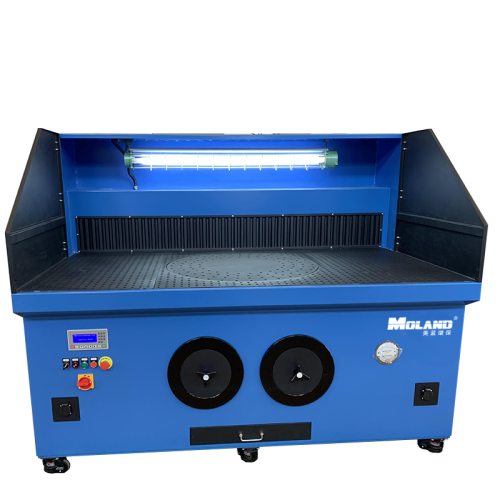
| Zone C | Manual grinding and deburring (weld seam finishing) | 12 stations | 2 shifts/day |
| Zone D | Automatic grinding (surface finishing, edge preparation) | 6 stations | 1 shift/day |
The facility previously relied on a fragmented approach: portable fume extractors at welding stations, standalone dust collectors at grinding booths, and natural ventilation for the remaining areas. Specifically, this approach created five major problems:
In summary, the fragmented dust collection approach was incompatible with the company's obligations as a listed entity — and the cost of inaction was escalating across compliance, financial, and human dimensions.
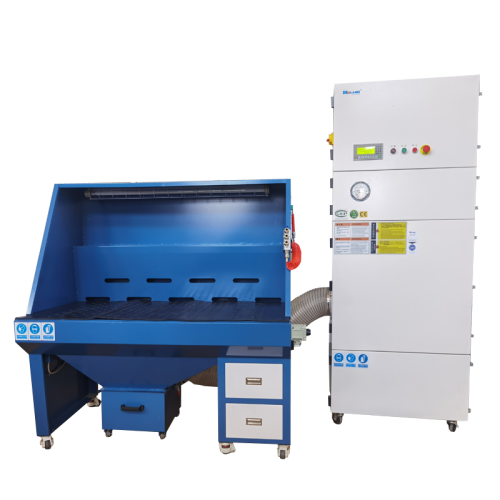
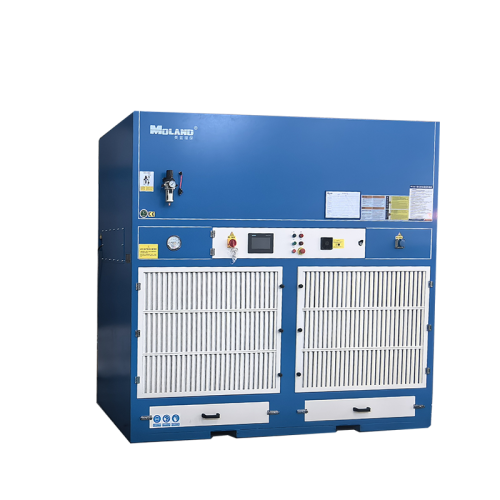
MOLAND designed a dual-stream centralized dust collection system that addresses the fundamentally different characteristics of welding fume and grinding dust. Specifically, the system comprises two parallel extraction networks — one for welding, one for grinding — each optimized for its specific dust profile, yet sharing a common control platform and monitoring infrastructure.
| System Stream | Serves | Dust Type | Filtration Technology | Volumen de aire |
|---|---|---|---|---|
| Stream 1 — Welding | Zones A + B (24 stations) | Sub-micron fume (0.1–1.0 μm) | PTFE membrane cartridge | 18,000 m³/h |
| Stream 2 — Grinding | Zones C + D (18 stations) | Coarse abrasive dust (10–500 μm) | Cyclone pre-separator + PTFE cartridge | 22,000 m³/h |
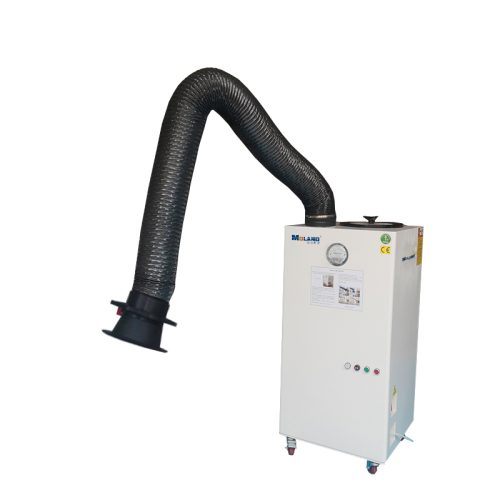
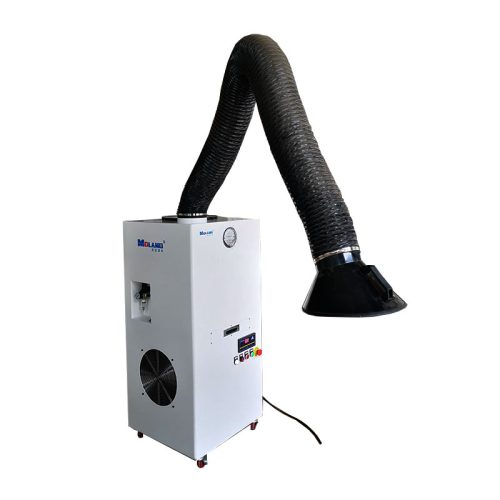
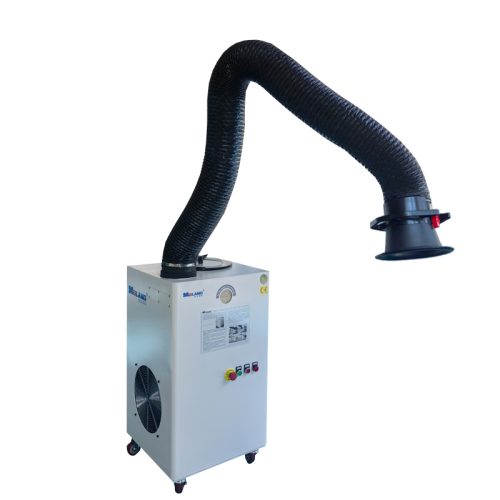
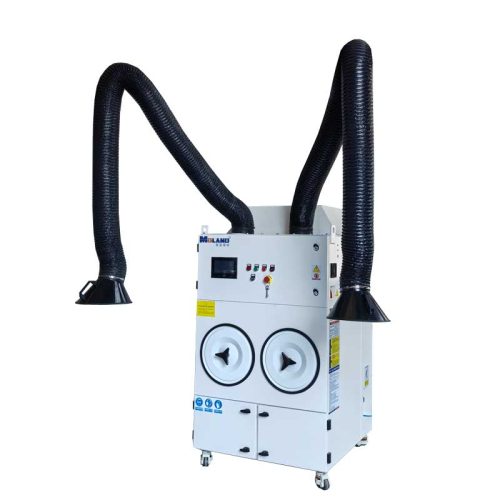
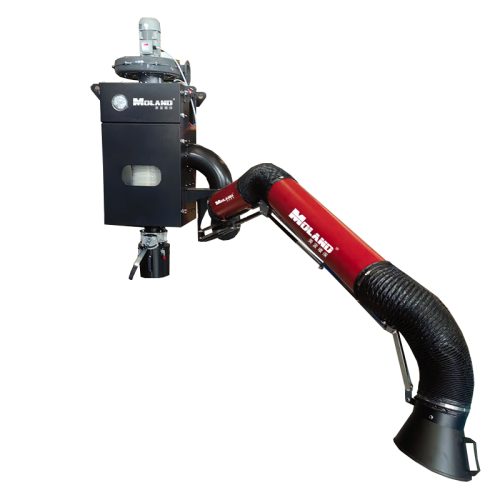
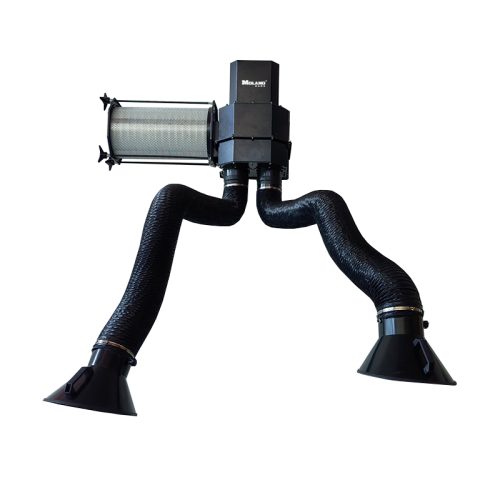
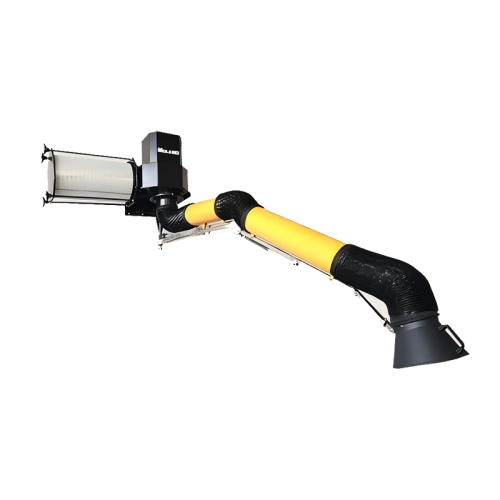
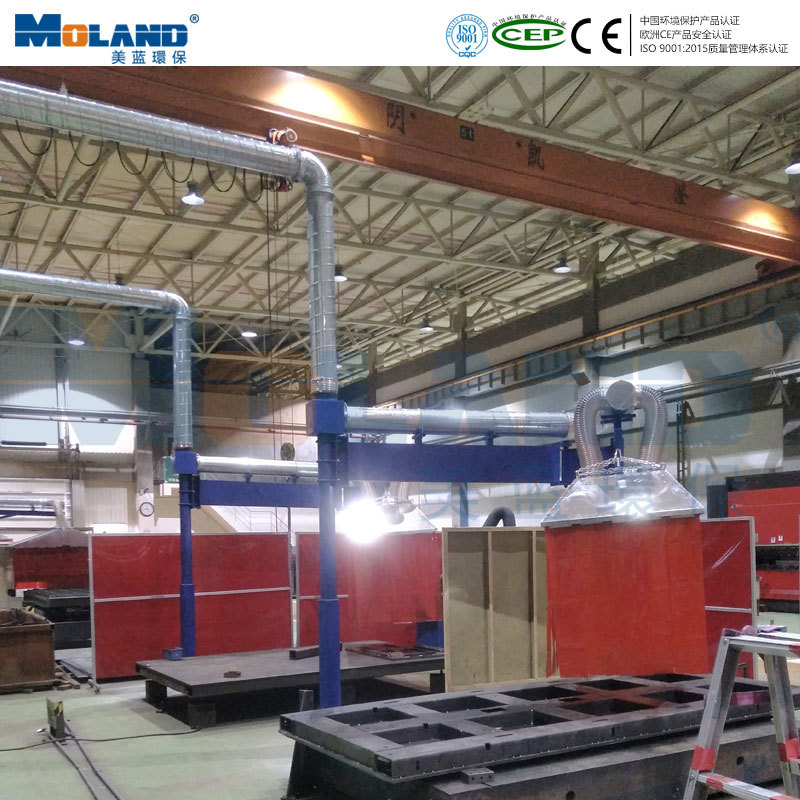
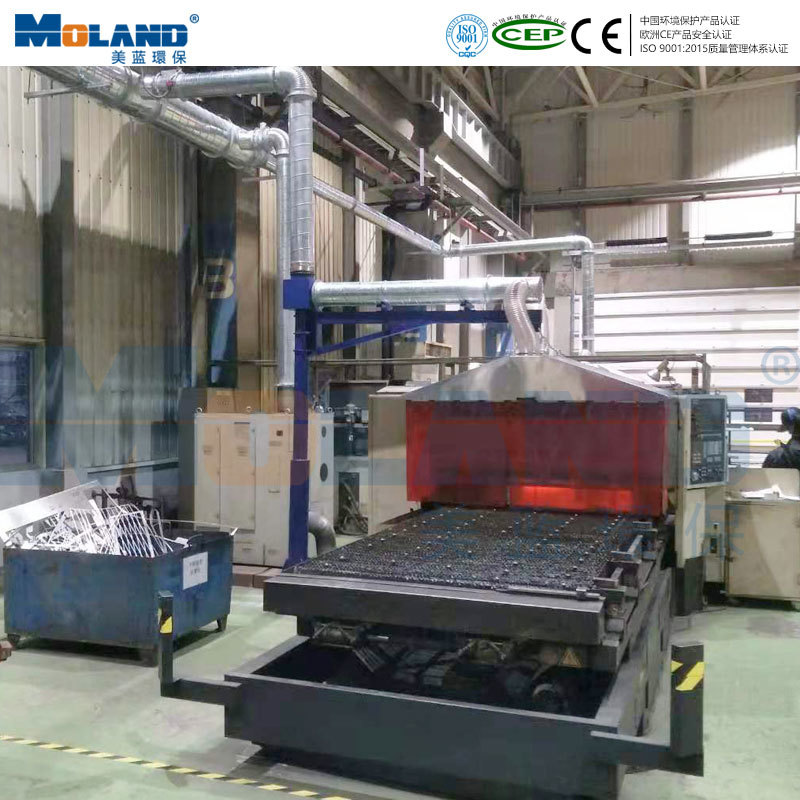
The welding stream serves 16 manual welding stations and 8 robotic welding cells. Specifically, manual stations are equipped with 360° rotating flexible suction arms (φ160mm × 3m reach), while robotic cells use fixed enclosure hoods. Moreover, all 24 extraction points connect to a galvanized steel duct network with branch dampers at each station.
Key specifications:
| Component | Specification |
|---|---|
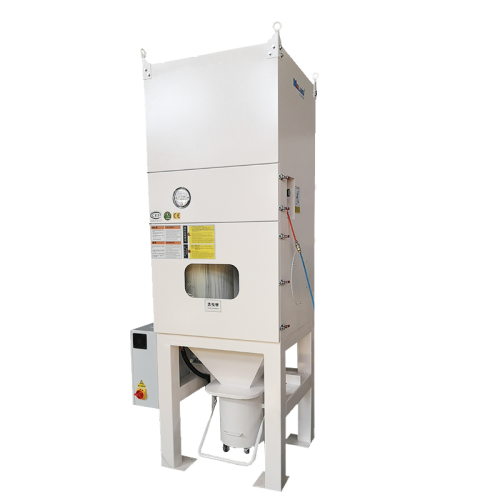
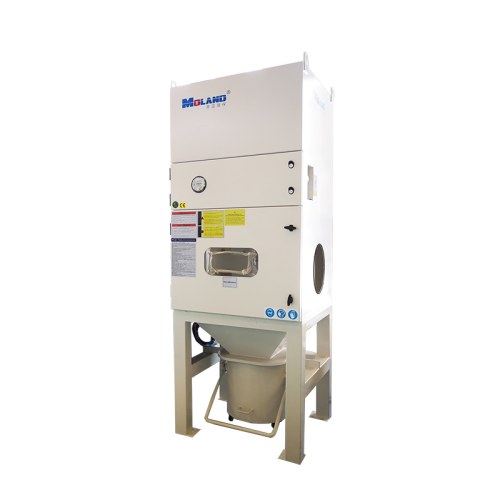
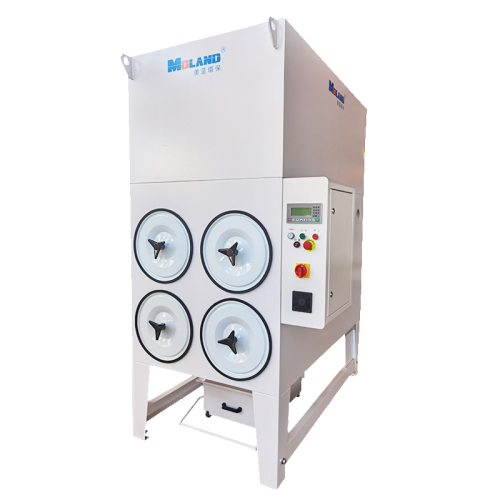
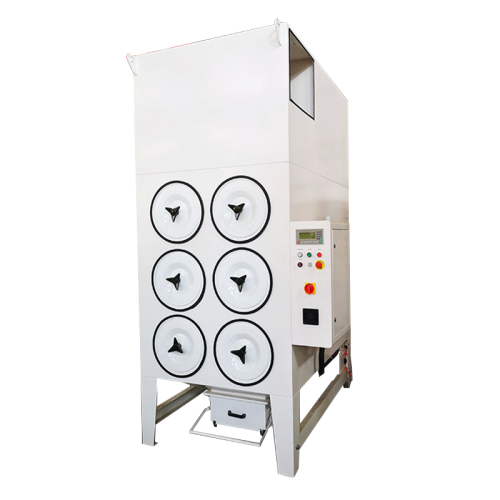
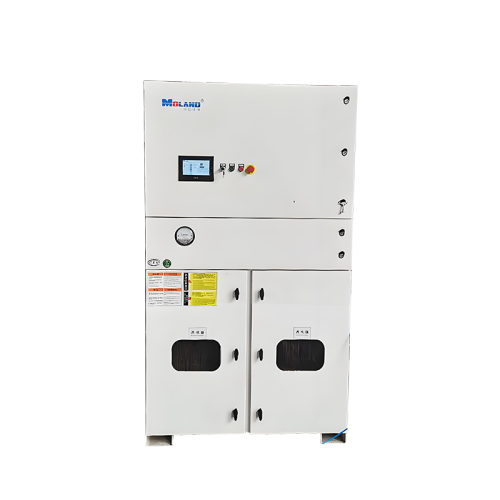
| Main Host Unit | MLWF450 × 1 (centralized) |
| Total Air Volume | 18,000 m³/h |
| Duct Network | φ200–φ500mm galvanized steel, 120m total |
| Filter Type | PTFE membrane cartridge, 0.3μm / 99.97% |
| Pulse Cleaning | Automatic, PLC-controlled, compressed air |
| Fan Control | Siemens VFD with duct pressure sensor |
| Branch Dampers | Manual butterfly damper at each station |
Furthermore, the Siemens VFD adjusts fan speed automatically based on how many welding stations are active. Specifically, when operators close dampers at inactive stations, duct pressure rises, signaling the VFD to reduce motor speed. Consequently, the system consumes only the energy required for active stations — delivering average energy savings of 45–55% compared to constant-speed operation.
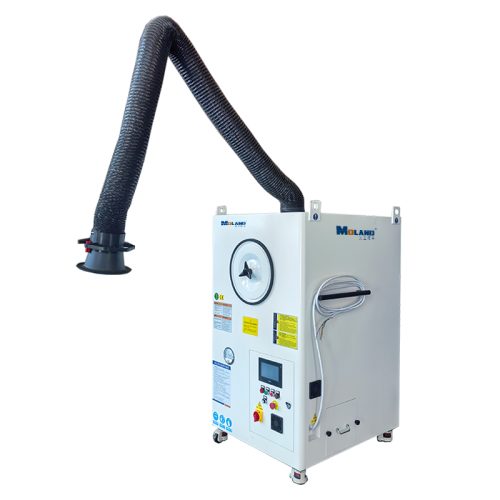
The grinding stream serves 12 manual grinding stations and 6 automatic grinding stations. Specifically, the dust profile from grinding is fundamentally different from welding fume — it consists of coarse, heavy particles that would rapidly clog fine membrane filters. Therefore, MoLAND designed a two-stage filtration approach: cyclone pre-separation followed by cartridge filtration.
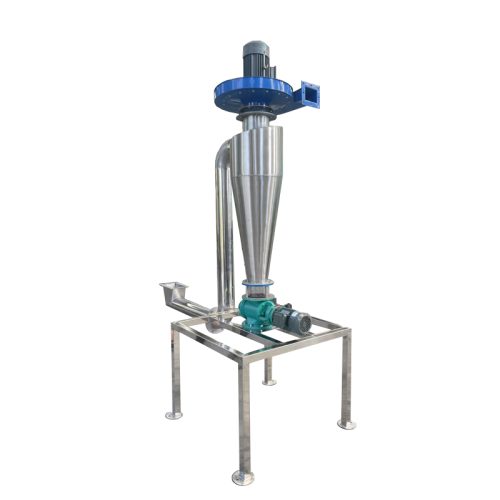
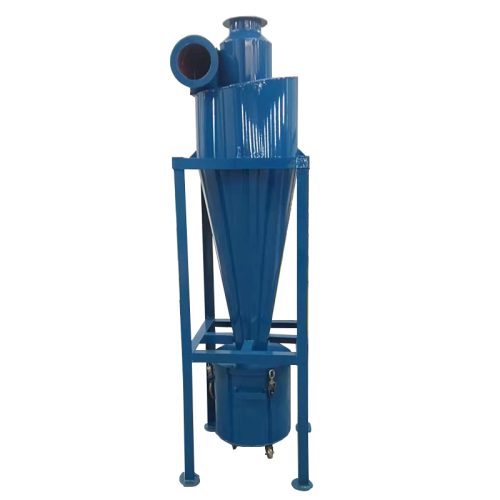
Stage 1: Cyclone Pre-Separator
A large-diameter cyclone pre-separator is installed upstream of the cartridge filter. Specifically, the cyclone removes 85–90% of coarse grinding dust (particles above 10 microns) through centrifugal force before the airstream reaches the filter cartridges. Moreover, the separated coarse dust falls into a collection hopper with a rotary airlock valve for continuous discharge. Consequently, the cartridge filters downstream receive only fine residual dust, dramatically extending their service life.
Stage 2: PTFE Cartridge Filtration
After cyclone pre-separation, the airstream passes through PTFE membrane cartridge filters. Specifically, these cartridges capture the remaining 10–15% of fine particles — including grinding wheel abrasive fragments and sub-micron metal dust. Moreover, the PTFE membrane's smooth surface enables efficient pulse-jet cleaning, maintaining consistent airflow resistance throughout the cartridge's service life.
Key specifications:
| Component | Specification |
|---|---|
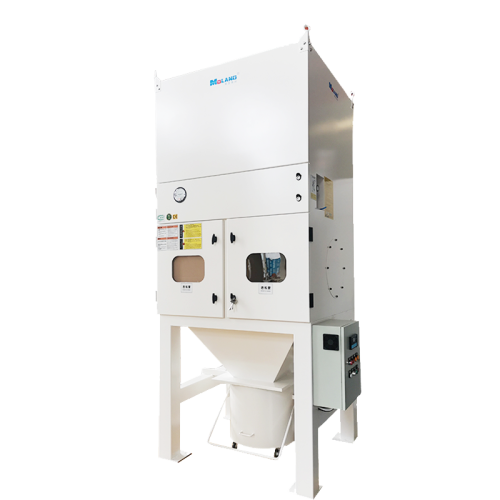
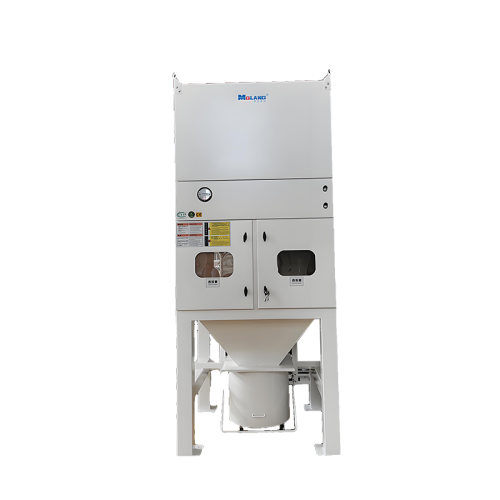
| Main Host Unit | MLWF550 × 1 (centralized) |
| Total Air Volume | 22,000 m³/h |
| Cyclone Pre-Separator | φ1,200mm, 85–90% coarse dust removal |
| Duct Network | φ250–φ630mm galvanized steel, 95m total |
| Filter Type | PTFE membrane cartridge (post-cyclone), 0.3μm / 99.97% |
| Pulse Cleaning | Automatic, PLC-controlled |
| Fan Control | Siemens VFD with duct pressure sensor |
| Dust Discharge | Rotary airlock valve → collection drum |
Combining welding and grinding exhaust into a single duct network presents three fundamental problems. First, grinding dust particles are 10 to 500 times larger than welding fume particles — mixing them would cause rapid duct blockages and filter blinding. Second, grinding generates sparks and hot particles that pose a fire risk to membrane filter cartridges — requiring expensive spark detection and suppression systems. Third, welding and grinding stations often operate on different schedules — a combined system would force simultaneous operation of all extraction points, wasting energy.
Therefore, the dual-stream approach delivers three advantages. Specifically, each stream is optimized for its dust type — maximizing filtration efficiency and cartridge life. Furthermore, the two streams operate independently — welding can run while grinding is offline, and vice versa. Consequently, energy consumption is minimized for each process separately. Moreover, the shared control platform and monitoring infrastructure reduce overall system complexity compared to maintaining completely independent systems.
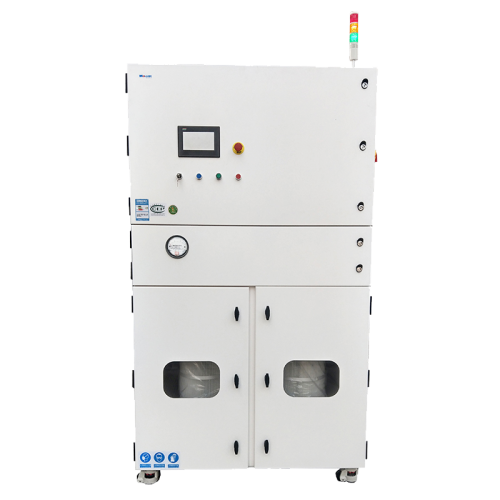
Both dust collection streams are managed through a single MoLAND smart monitoring platform. Specifically, the platform provides:
For the customer's ESG reporting requirements, the MOLAND platform generates automated reports that integrate directly with the company's sustainability disclosure framework. Specifically, the system logs:
Moreover, these reports satisfy both ISO 14001 environmental management audit requirements and the company's MSCI ESG reporting obligations. Consequently, the customer can demonstrate measurable, third-party-verifiable environmental performance improvements to regulators, auditors, and investors.
The installation was executed in three phases to minimize production disruption. Specifically, MoLAND coordinated with the customer's production planning team to schedule installation work during planned maintenance windows and shift transitions.
During the first phase, all ductwork for both streams was installed. Specifically, the welding stream duct network (120m total) and grinding stream duct network (95m total) were prefabricated off-site and assembled on-site using modular flange connections. Moreover, branch dampers were installed at each extraction point and individually balanced during commissioning. Furthermore, the cyclone pre-separator for the grinding stream was positioned outdoors, connected to the main duct through a weatherproof transition section.
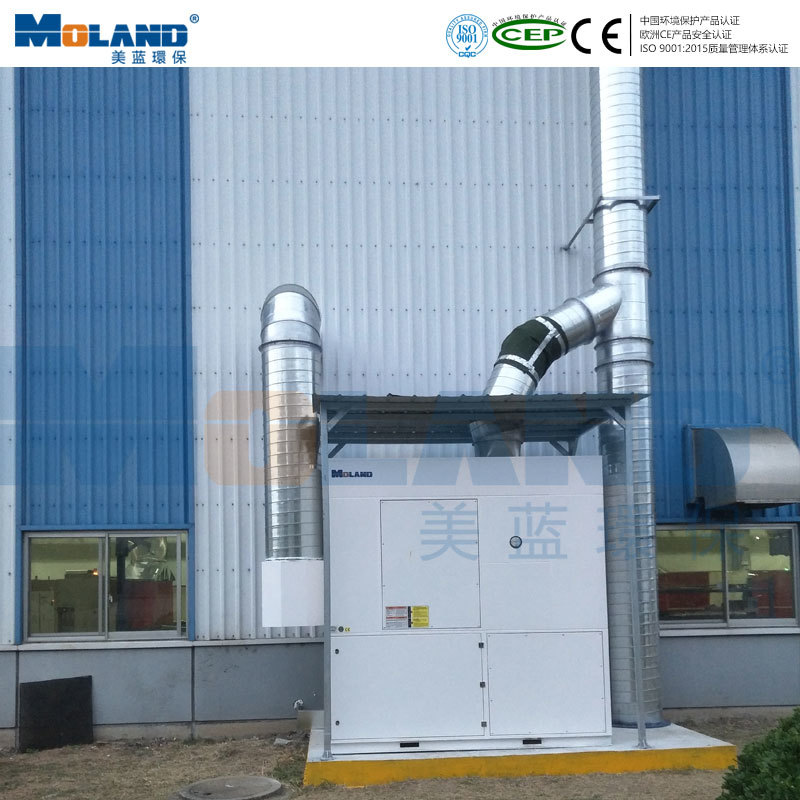
The two main host units — MLWF450 and MLWF550 — were installed in the outdoor equipment yard. Specifically, each unit was connected to the 380V three-phase power supply, compressed air system, and the MoLAND smart monitoring platform. Moreover, Siemens VFDs were programmed and integrated with duct pressure sensors for automatic fan speed control. Additionally, all extraction arms and enclosure hoods were connected to branch ducts and tested for airtightness.
The final phase included comprehensive system testing. Specifically, MoLAND's engineers conducted:
Consequently, both streams passed all acceptance criteria on the first attempt.
| Metric | Before | After | Improvement |
|---|---|---|---|
| Welding zone respirable dust | 8–15 mg/m³ | 0.8–1.5 mg/m³ | 90% reduction |
| Grinding zone respirable dust | 12–22 mg/m³ | 1.0–2.0 mg/m³ | 91% reduction |
| ISO 14001 audit status | Failed (2 consecutive years) | Passed with zero non-conformances | Full compliance |
| MSCI ESG rating impact | BB (downgraded) | BBB (restored) | One-level upgrade |
| Filter cartridge replacement | Every 6–8 weeks | Every 14–18 months | 10x longer life |
| Annual consumable cost | ¥380,000/year (42 portable units) | ¥72,000/year (2 centralized systems) | 81% reduction |
| Annual energy cost | ¥520,000/year (42 fixed-speed motors) | ¥240,000/year (2 VFD-controlled hosts) | 54% energy savings |
| Worker health complaints | 15 per year | 0 per year | Eliminated |
| Welding/grinding staff turnover | 23% per year | 9% per year | 61% reduction |
| Item | Amount |
|---|---|
| Total system investment | ¥1,280,000 |
| Annual consumable savings | ¥308,000 |
| Annual energy savings | ¥280,000 |
| Avoided ISO audit remediation costs | ¥150,000 |
| Reduced recruitment/training from lower turnover | ¥120,000 |
| Avoided regulatory penalties | ¥200,000+ |
| Total annual savings | ¥1,058,000+ |
| Payback period | 14 months |
Beyond direct financial returns, the system delivered measurable ESG benefits:
Separating welding and grinding into two independent extraction streams was the most critical design decision. Specifically, this approach prevents cross-contamination between fine welding fume and coarse grinding dust — each stream's filtration is optimized for its specific particle size distribution. Moreover, independent operation allows each stream to run only when its respective process is active, avoiding unnecessary energy consumption.
The cyclone pre-separator is essential for handling grinding dust cost-effectively. Specifically, by removing 85–90% of coarse particles before they reach the cartridge filters, the cyclone extends cartridge life from 6–8 weeks (without pre-separation) to 14–18 months. Consequently, annual filter consumable costs drop by over 80%. Furthermore, the cyclone's continuous rotary airlock discharge eliminates the need for manual dust collection — reducing maintenance labor and exposure risk.
The Siemens VFD on each host unit automatically matches fan speed to the actual number of active extraction points. Specifically, in a workshop where typically 50–70% of stations operate simultaneously, the VFD reduces average energy consumption by 45–55% compared to constant-speed operation. Moreover, lower fan speeds reduce mechanical wear on bearings and impellers, extending maintenance intervals and equipment life.
Both streams use PTFE membrane cartridges — the same high-efficiency filtration technology. Specifically, the membrane's smooth surface prevents deep particle penetration, enabling near-complete pulse-jet cleaning recovery. Consequently, both streams achieve 99.97% filtration efficiency at 0.3 microns — meeting indoor air recirculation standards and eliminating the need for external exhaust.
The MoLAND smart monitoring platform transforms dust collection from a maintenance burden into a compliance asset. Specifically, automated data logging provides auditable evidence of continuous environmental performance — directly supporting ISO 14001 surveillance audits and ESG disclosure requirements. Furthermore, remote diagnostics enable MoLAND's service team to identify and resolve issues before they impact compliance or production.
MOLAND designs and manufactures centralized dust collection systems tailored to the elevated requirements of publicly listed manufacturers. Specifically, our solutions include:
Listed enterprises face scrutiny that private companies don't — from regulators, auditors, investors, and the public. A centralized dust collection system that delivers measurable, auditable, and reportable performance isn't just a workplace safety investment — it's a governance and sustainability imperative.
Contact MoLAND today for a free on-site assessment and custom centralized dust collection design for your welding and grinding operations.