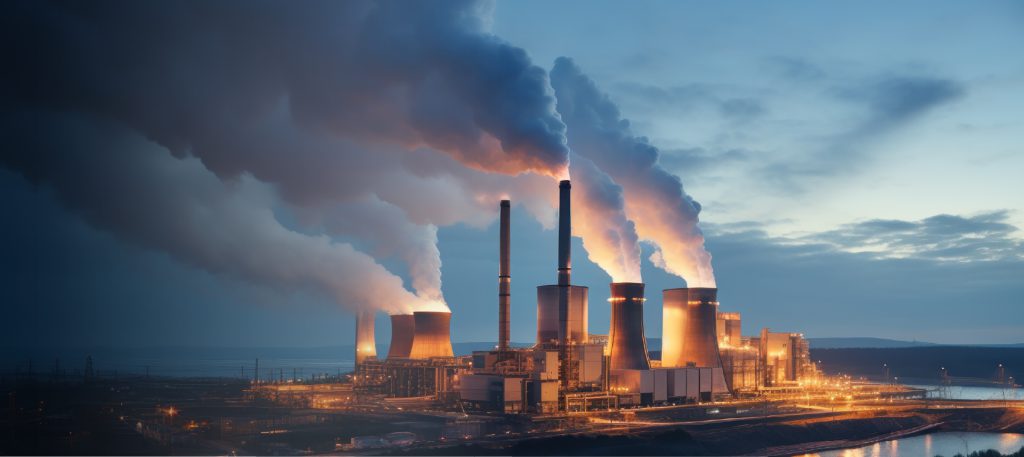







welding fume health cost Welding fumes are not just a health hazard. They are a silent drain on productivity, compliance budgets, and worker retention. As the 29th Beijing Essen Welding & Cutting Fair 2026 opens in Shenzhen this week, the urgency has never been greater. Moreover, the global welding fume extraction market has surpassed $105 billion, growing at a CAGR of 3.5% toward $148 billion by 2035. Therefore, understanding the real cost of welding fumes is no longer optional—it is a business imperative.
welding fume health cost Welding fumes are classified as a Group 1 carcinogen by the International Agency for Research on Cancer (IARC). This is the highest hazard category, shared with asbestos and tobacco smoke. Furthermore, epidemiological studies confirm a 48% increased risk of lung cancer among exposed workers (RR 1.48, 95% CI 1.29–1.70).
However, cancer is only part of the story. Welding fumes also cause:
In China, the data is equally alarming. According to the National Health Commission, uncontrolled welding workshops typically maintain TWA concentrations of 8–15 mg/m³. This far exceeds the GBZ 2.1-2019 occupational limit of 4.0 mg/m³. Additionally, workers in shipbuilding and rail equipment manufacturing face a 3.8× higher risk of pneumoconiosis and respiratory tumors after 15 years of exposure.
Most people focus on visible smoke. However, the real danger lies in what you cannot see. In automated CO₂ shielded welding (MAG), PM2.5 accounts for over 65% of total particulate matter. Furthermore, particles below 1 micrometer bypass the upper respiratory defense entirely, depositing directly in the alveoli.
Consequently, a study published in 2025 demonstrated that the excess lifetime cancer risk from welding fume exposure ranges from 1.28 × 10⁻⁴ to 6.88 × 10⁻⁴—well above WHO benchmark thresholds. Specifically, ultrafine particles (under 100 nanometers) accumulate in the lower lobes of the lungs, where they cause the greatest tissue damage across all age groups.
Therefore, filtration systems that only address "total dust" without targeting sub-micron particles leave workers exposed to the most dangerous fraction.
Global regulators are tightening standards at an unprecedented pace. In January 2024, Australia slashed its welding fume workplace exposure standard from 5 mg/m³ to 1 mg/m³—a five-fold reduction. Meanwhile, the European Union continues to enforce strict limits on hexavalent chromium at 0.05 mg/m³ during stainless steel welding.
In China, GBZ 2.1-2019 already mandates a PC-TWA of 4.0 mg/m³ for welding fumes. However, enforcement is intensifying. Factories that fail random inspections face fines, production halts, and worker compensation claims. Specifically, occupational disease compensation accounts for approximately 12.5% of total work-injury insurance expenditures in the machinery manufacturing sector.
Moreover, supply chain ESG requirements are adding pressure. International buyers increasingly demand proof of clean air compliance before placing orders. Consequently, welding fume extraction is no longer just a safety investment—it is a competitive requirement for exporters.
Many workshops choose the cheapest fume extractor available. However, this approach ignores the total cost of ownership (TCO). Industry data reveals a stark reality:
表格
| Cost Component | Share of 5-Year TCO |
|---|---|
| Initial equipment purchase | 28% |
| Electricity consumption | 22% |
| Filter replacement & maintenance | 35% |
| Downtime & production losses | 15% |
Therefore, a unit that saves ¥10,000 upfront but consumes 40% more electricity and requires twice-as-often filter changes will cost significantly more over five years. Specifically, facilities using standard filter cartridges instead of PTFE membrane filters report filter replacement costs 2–3× higher, with replacement intervals of 3–6 months versus 3–5 years for PTFE.
Additionally, undersized systems—the result of improper airflow calculation—account for over 50% of underperforming installations. In other words, half the extraction systems in fabrication shops never deliver their promised performance from day one.
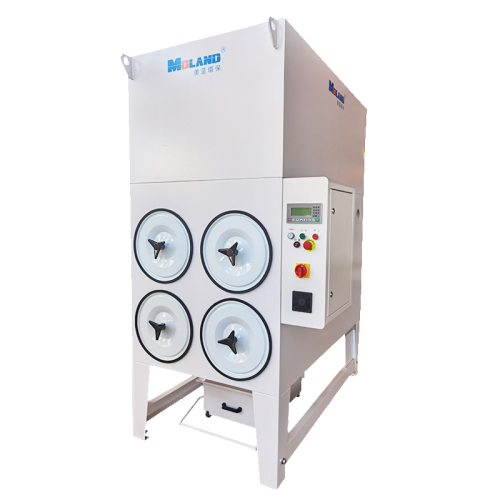
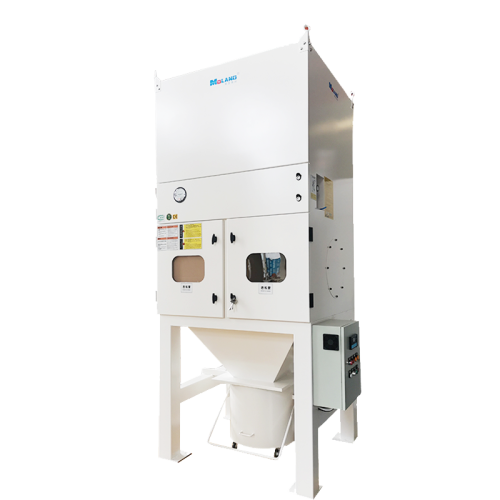
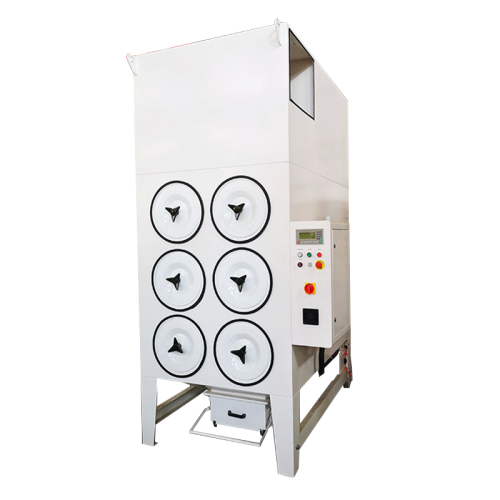
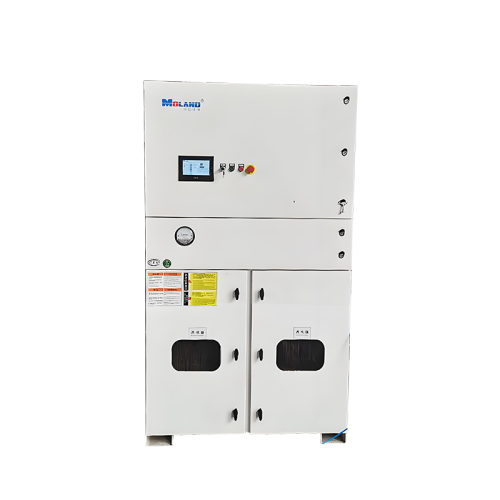
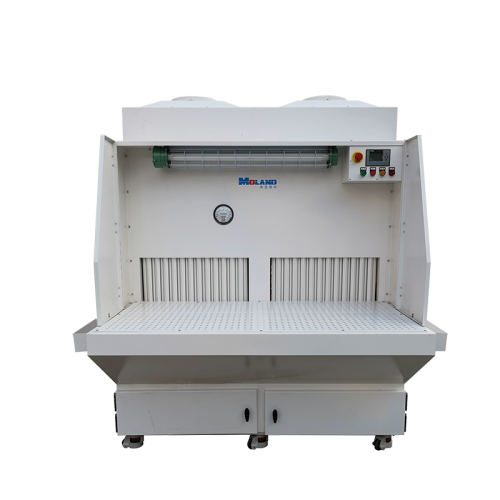
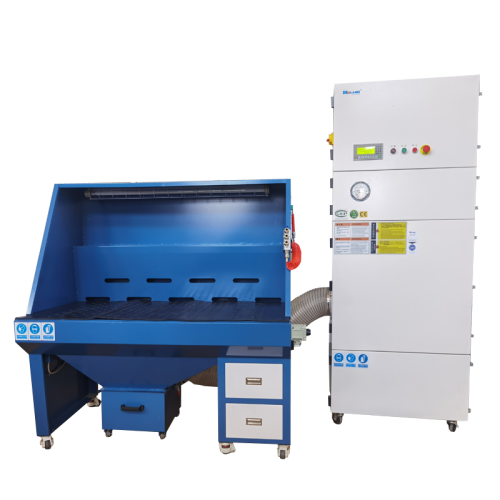
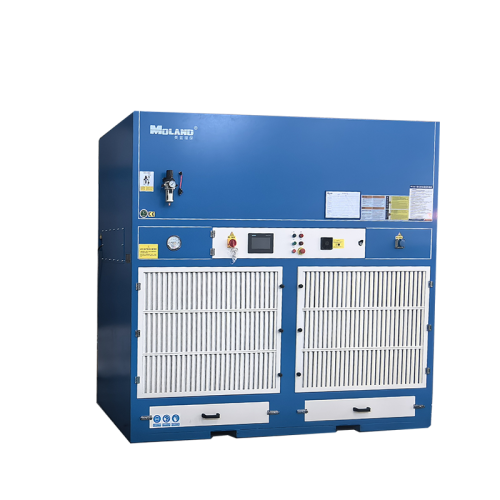
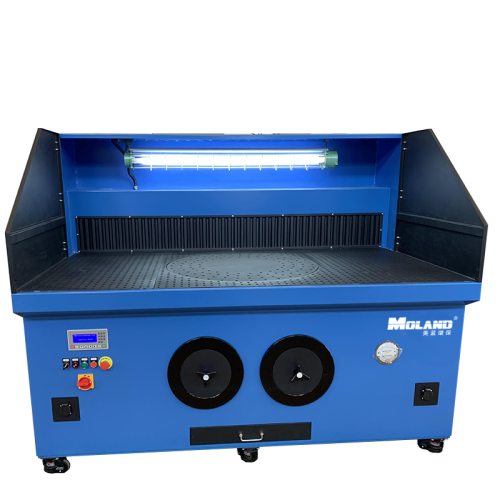
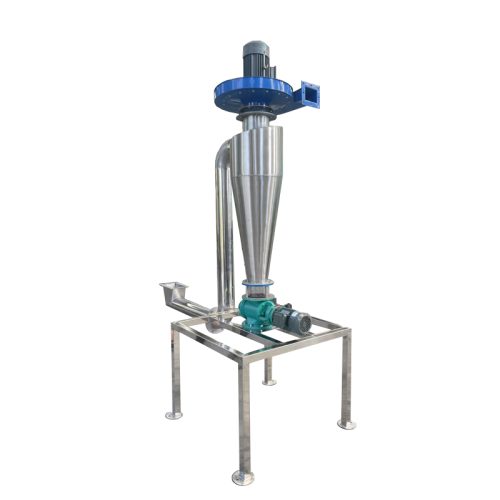
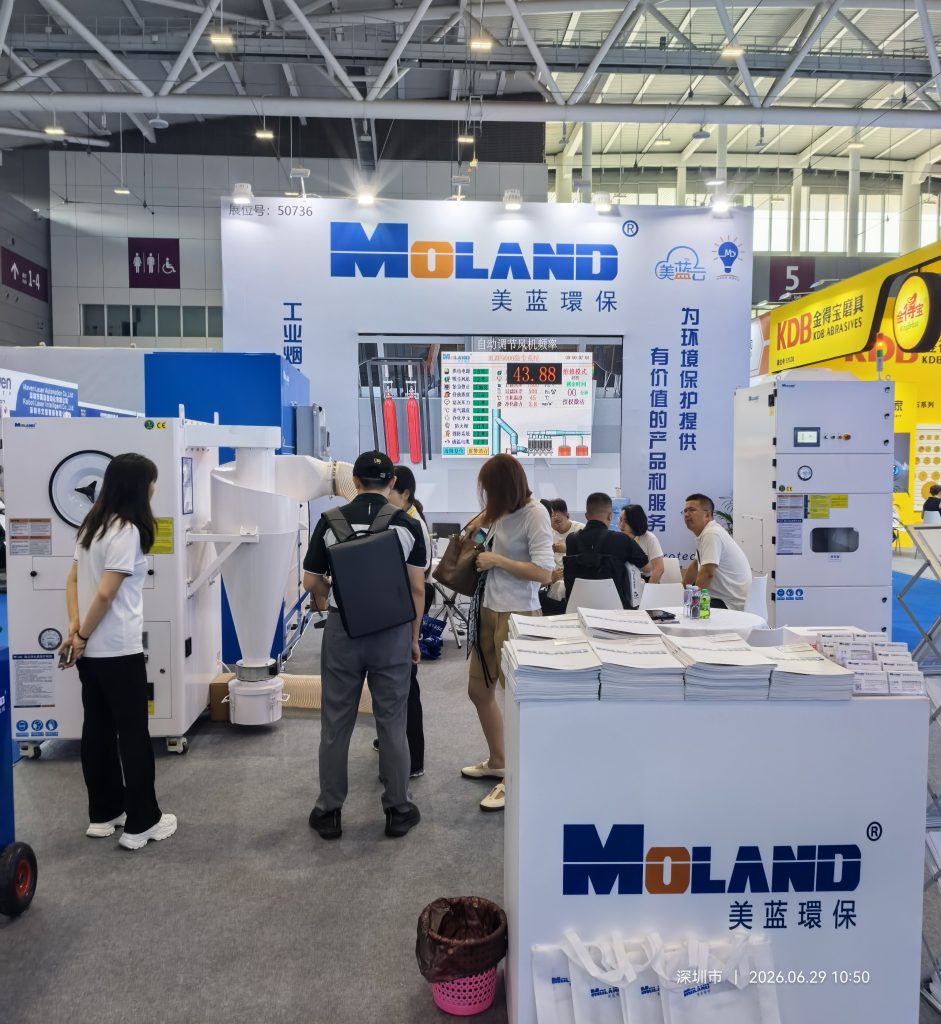
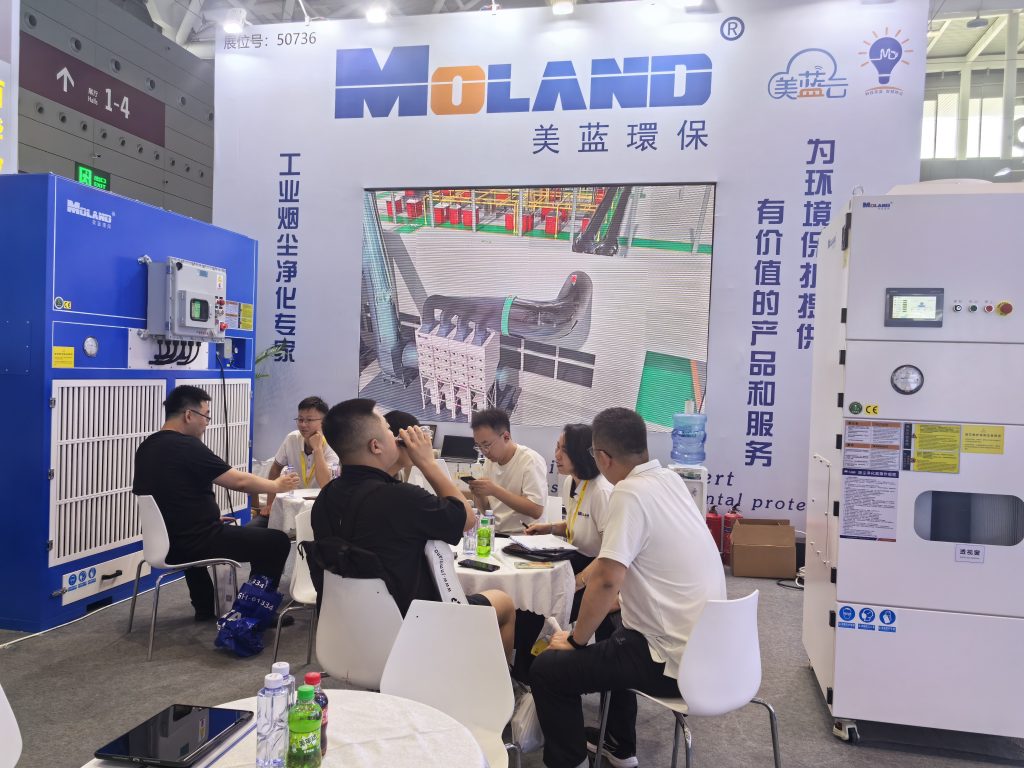
At Hall 5, Booth 50736, MoLAND Environmental Protection is not just displaying equipment. Instead, the team is demonstrating a complete methodology for welding fume management, built on three principles:
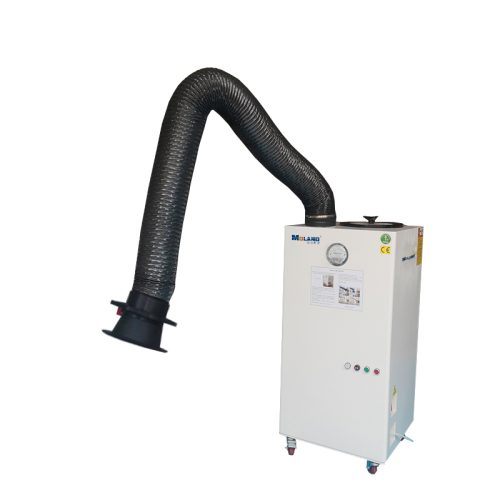
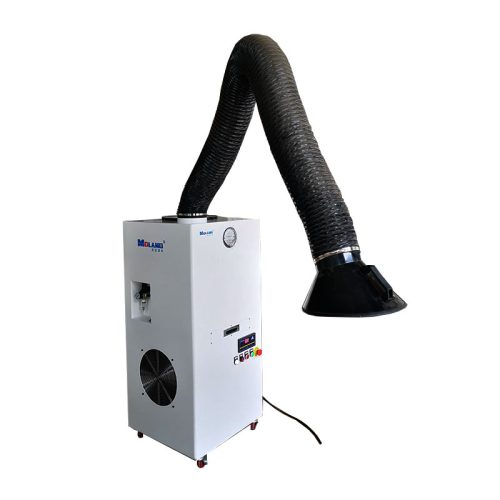
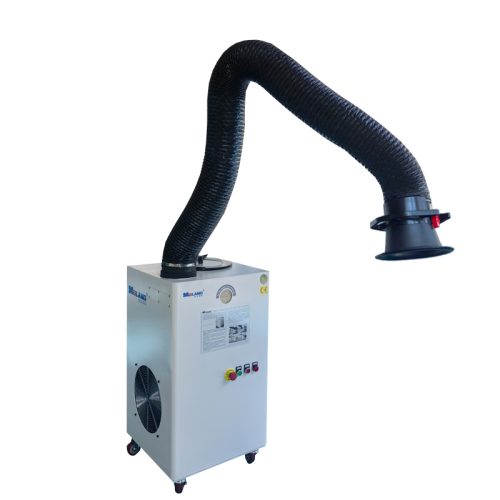
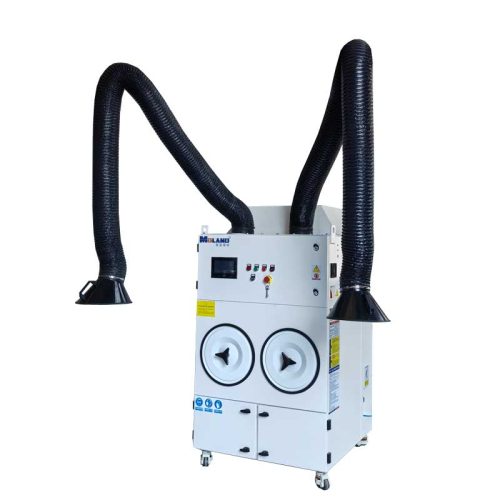
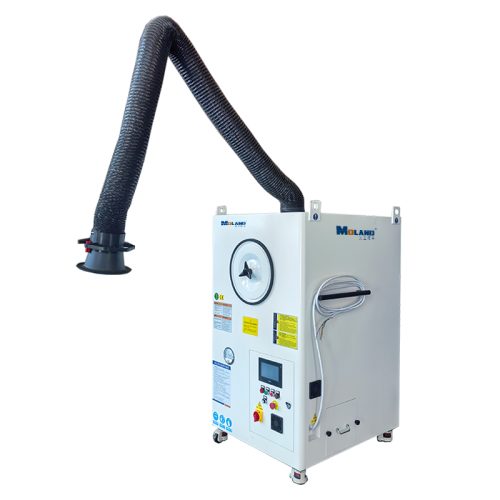
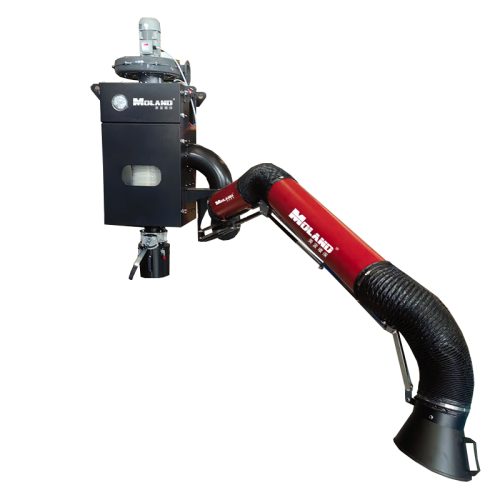
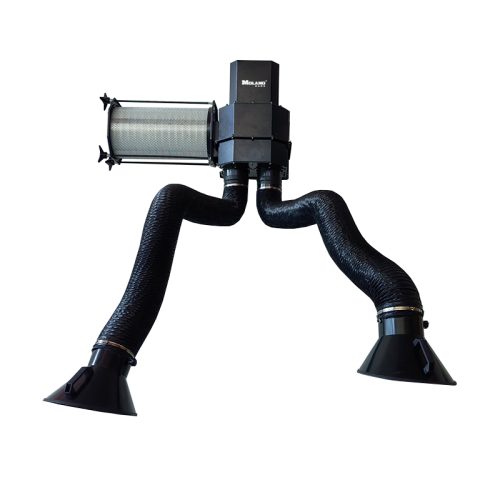
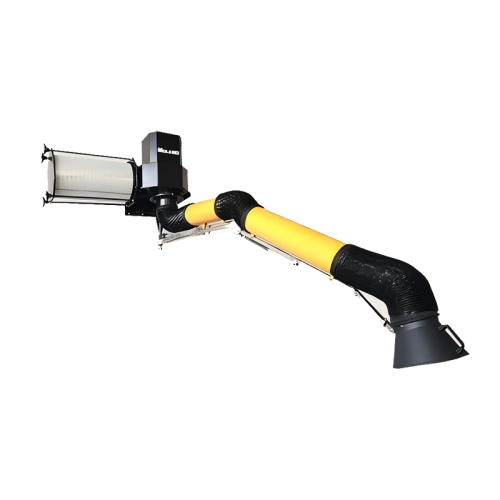
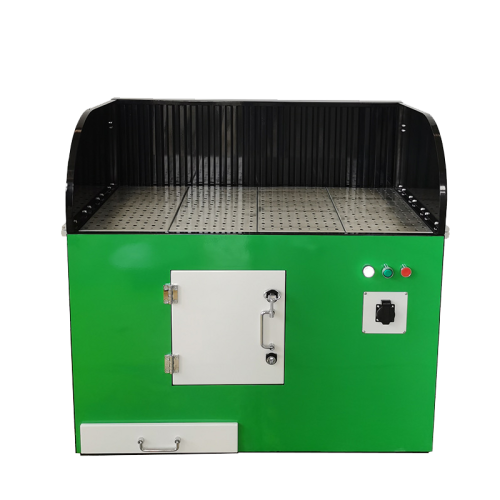
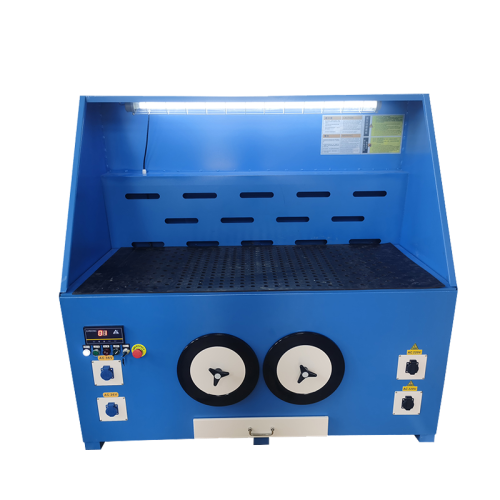
MoLAND's approach prioritizes capturing fume at the point of generation. Whether through mobile extractors with suction arms or overhead capture hoods, the goal is to intercept pollutants before they spread. Furthermore, this strategy reduces the total air volume that needs treatment, cutting energy costs by up to 50%.
Every workshop is different. MoLAND engineers perform on-site airflow calculations using the industry-standard formula: air volume = hood opening area × capture velocity × 3,600 × safety factor (1.2). Consequently, each system is precisely matched to the welding process, workspace layout, and duty cycle—eliminating the "oversized but underperforming" trap.
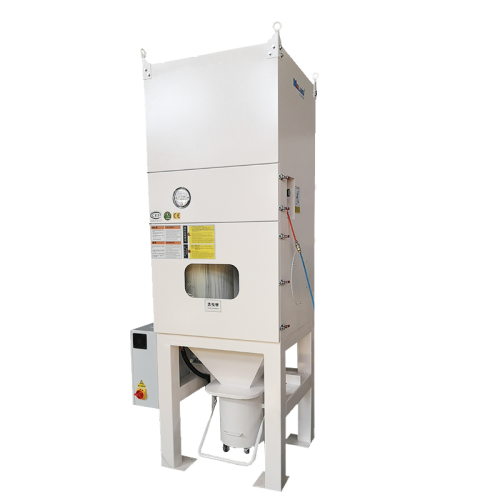
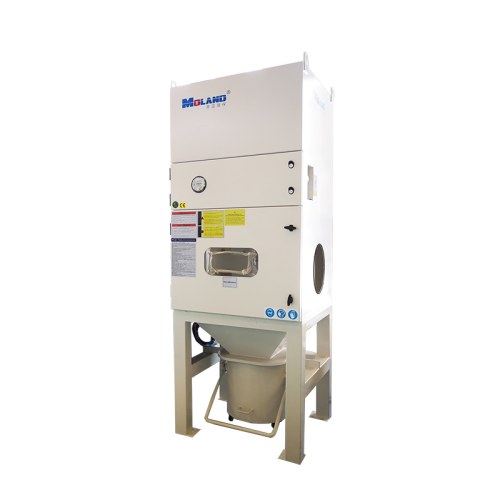
MoLAND specifies PTFE membrane filter cartridges as standard for all welding applications. These filters deliver ≥99.97% efficiency at 0.3 microns, with automatic pulse cleaning that maintains consistent airflow. Moreover, the 3–5 year filter lifespan dramatically reduces maintenance costs compared to conventional polyester or cellulose filters.
Investing in proper fume extraction delivers returns beyond regulatory compliance. Here is what the data shows:
Therefore, fume extraction is not a cost center—it is a profit enabler.
The 29th Beijing Essen Welding & Cutting Fair runs from June 29 to July 2 at Shenzhen World Exhibition & Convention Center. MoLAND's technical team will be at Hall 5, Booth 50736 throughout the event.
Specifically, visitors can expect:
Additionally, bring your workshop dimensions, welding process details, and current air quality concerns. MoLAND's engineers will provide preliminary system designs during the fair.
| Item | Details |
|---|---|
| Event | 29th Beijing Essen Welding & Cutting Fair |
| Dates | June 29 – July 2, 2026 |
| Venue | Shenzhen World Exhibition & Convention Center |
| MoLAND Booth | Hall 5, Booth 50736 |
Your workers breathe your workshop air every single day. The question is not whether you can afford proper fume extraction—it is whether you can afford the cost of not having it. What would cleaner air mean for your team's health, your production quality, and your bottom line?