

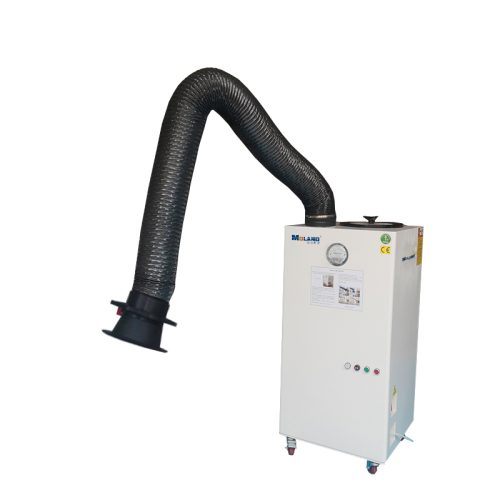
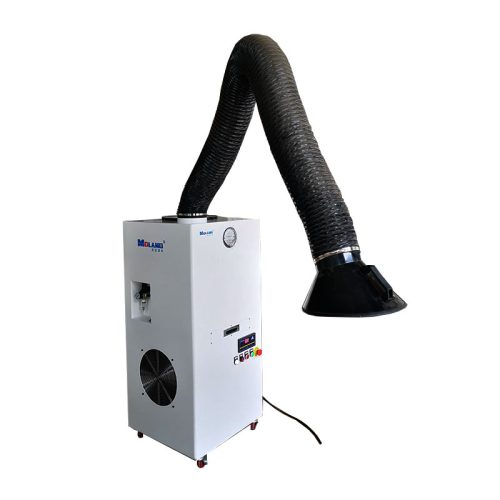
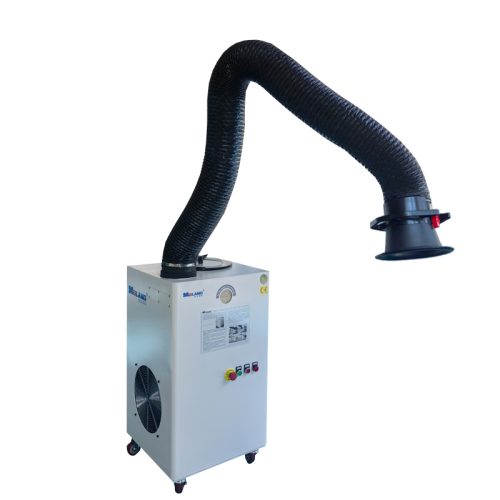
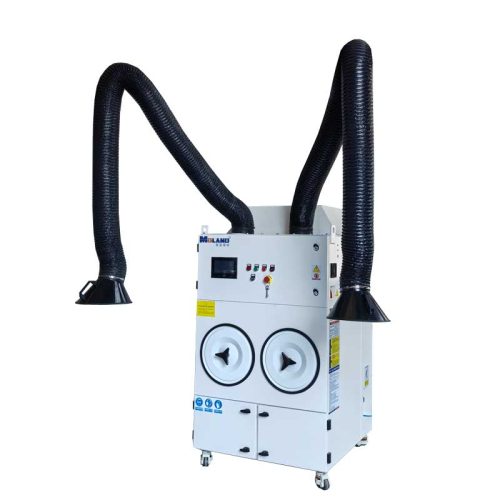
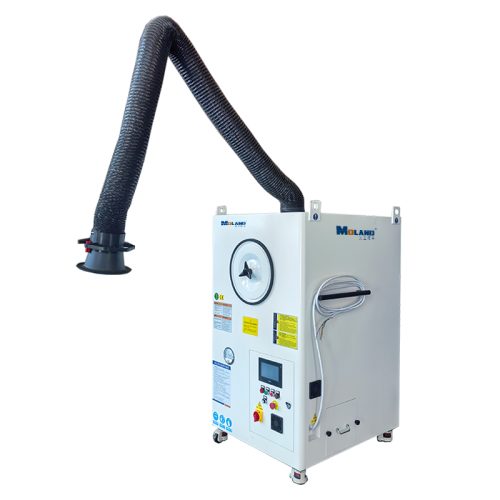
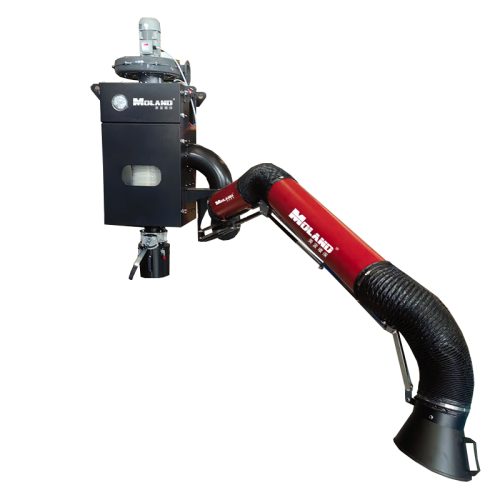
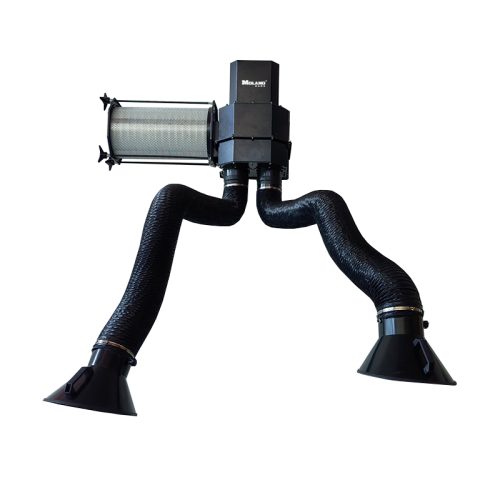
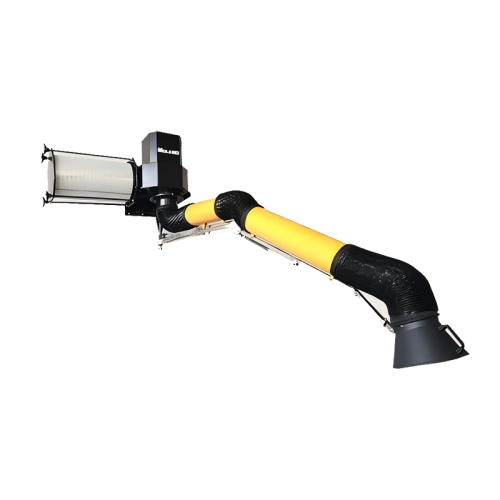


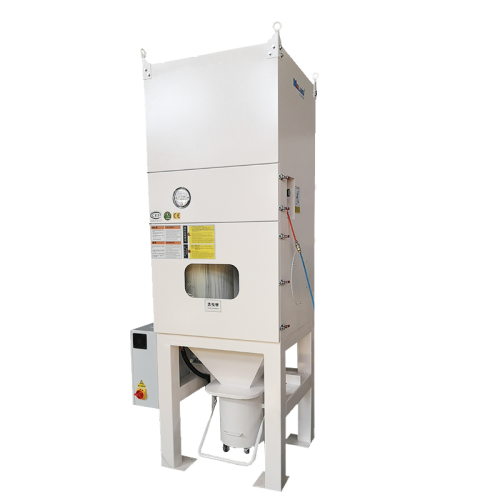
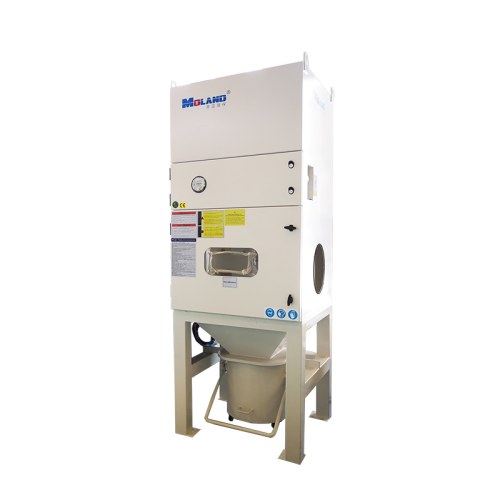
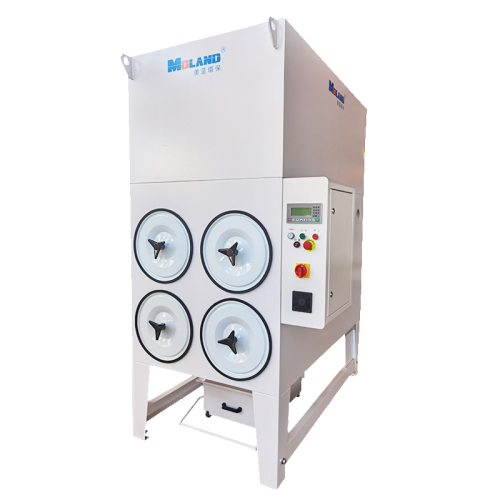
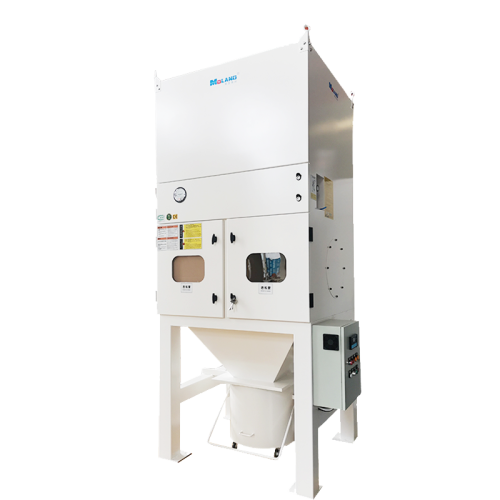
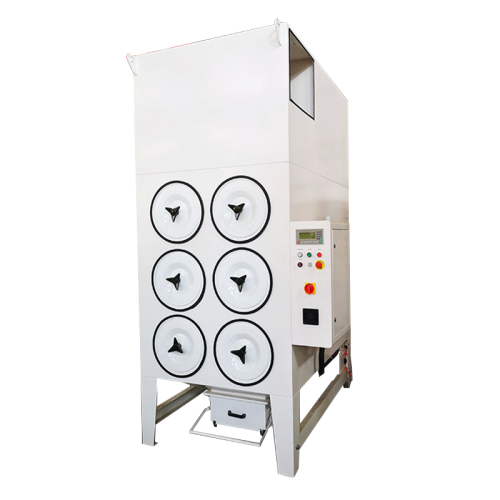
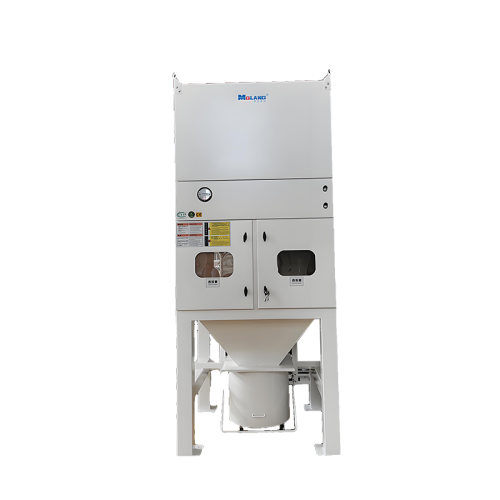

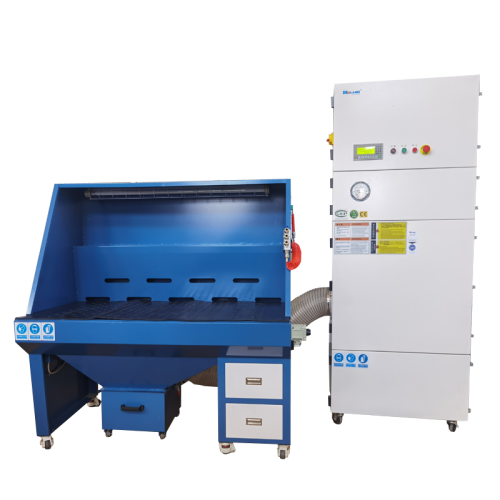
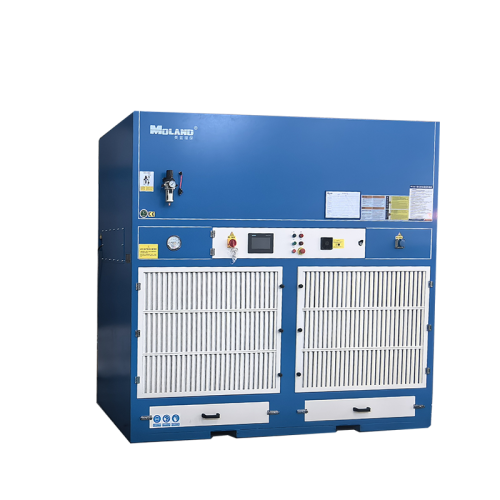
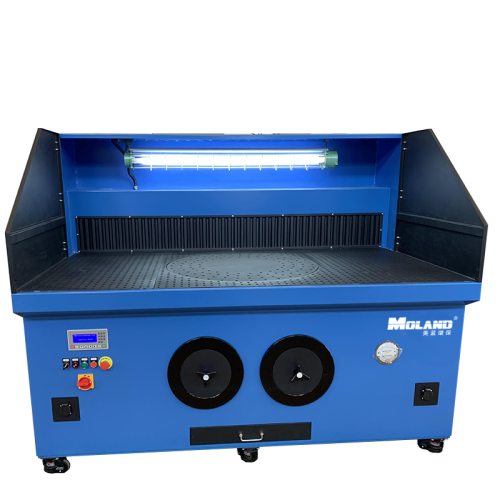

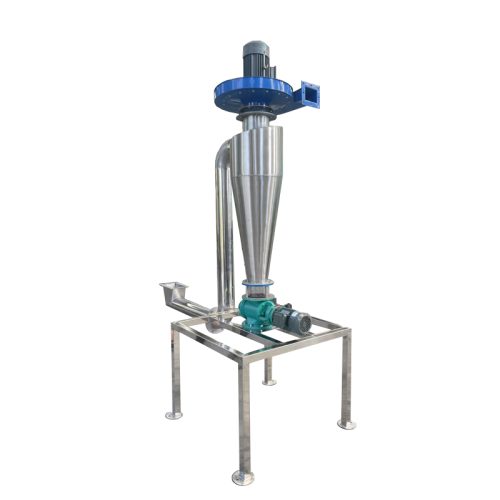

This project is the overall welding dust removal system for the workshop in the Wanping Nuclear Power Equipment Production Workshop. It adopts a blow-suction internal circulation treatment method, deploying 20 MLWF2000C dust collectors across two welding workshops to specifically address welding fume pollution.
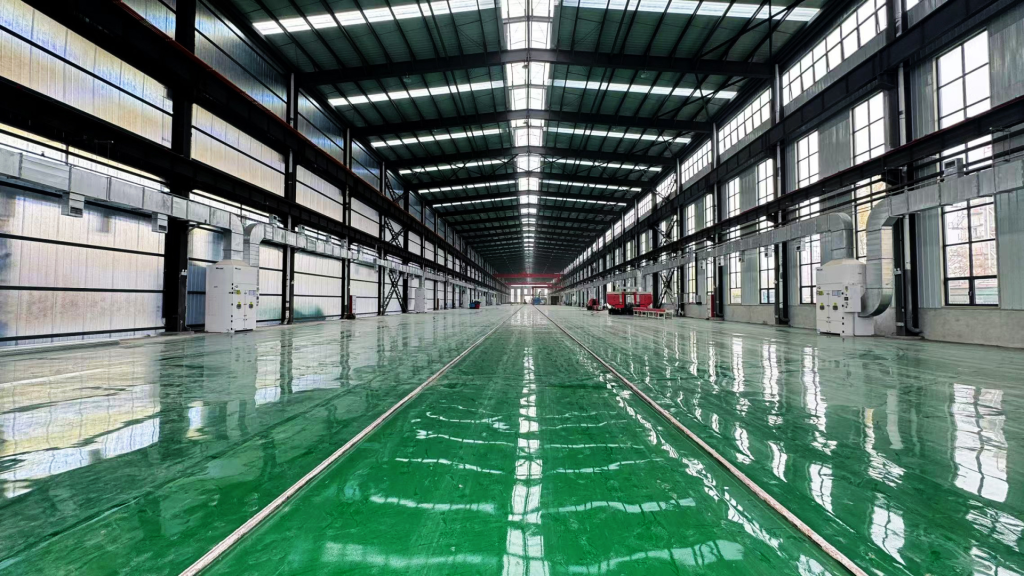
Based on the actual conditions of the workstations, we recommend using a blow-suction internal circulation purification method. The purified clean air will be used as the blowing power source to deliver air to one side of the workshop, while the other side will simultaneously undergo suction purification. This creates a stable air curtain within a 4-6 meter range. Welding fumes, heated and rising to the circulation layer, are then purified. Considering the potential impact of fume dispersion on surrounding fugitive concentrations, we extended the coverage area of the blow-suction ducts by about 4 meters to achieve optimal dust removal efficiency.
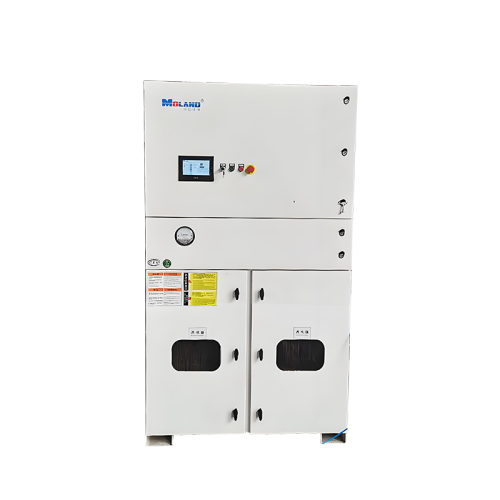
Regarding equipment selection, this project uses 20 sets of MLWF2000C blow-suction dust collectors. Each set has an air volume of 20,000 m³/h, for a total system air volume of 20,000 × 20 = 400,000 m³/h, ensuring an air exchange rate of 8.5 times/hour in the dust collector coverage area of the workshop. Welding fumes rise after being heated, encounter the circulation layer, and are drawn into the dust collection unit. After filtration by the filter cartridges, they meet indoor emission standards, thus achieving comprehensive dust removal and purification in the welding workshop. Simultaneously, the blow-suction dust collection system equip with duct suction inlets and air supply outlets on each unit. The combined use of these two units forms a stable airflow circulation layer, creating a good working environment for the workers.
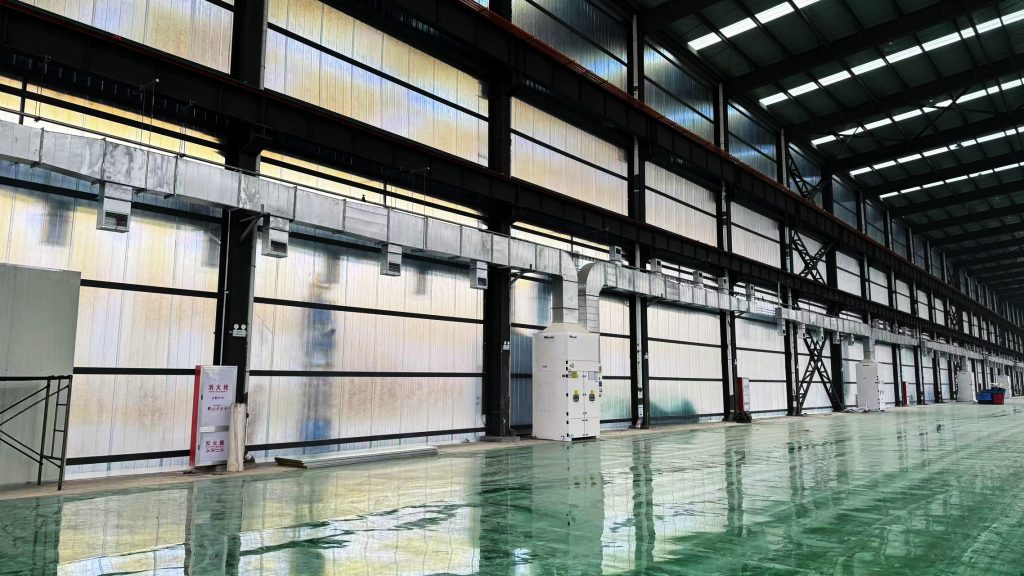
The blower-suction centralized dust collection system is suitable for complex working conditions such as welding large structural components, welding positions that are not fixed, large workpieces, and difficulties in capturing welding fumes. It can automatically adjust the fan speed according to the dust concentration at different locations in the workshop, effectively reducing equipment operating energy consumption.
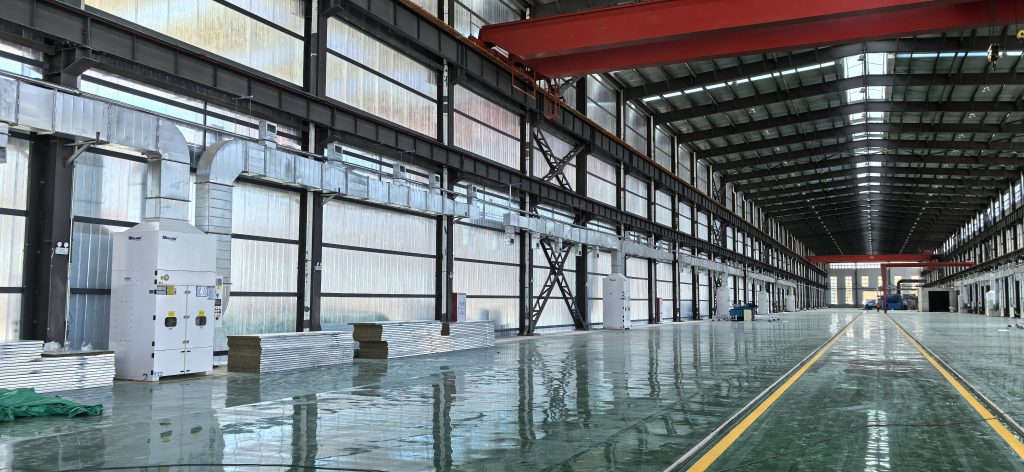
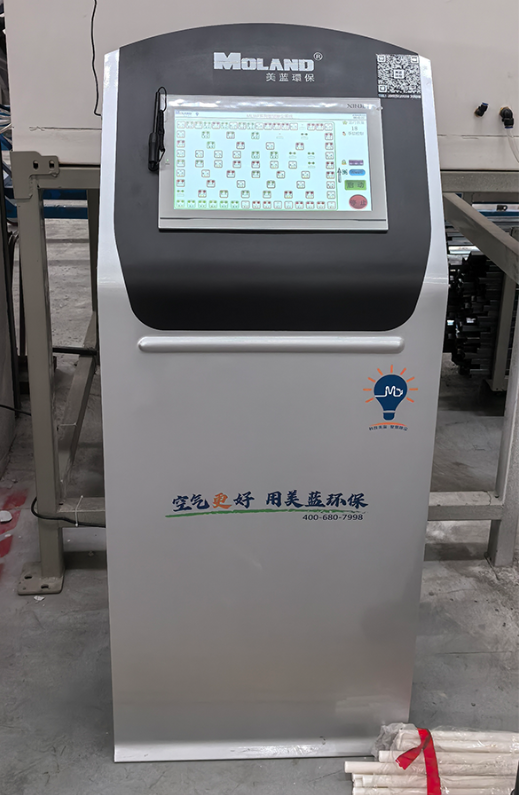
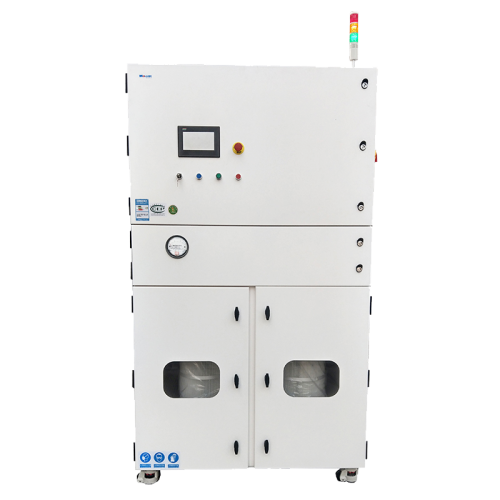
The dust collector control system adopts Moland independently developed PLC intelligent dust collection control system. The touch screen of the control system clearly displays the equipment's operating status. Specifically, the system can detect power phase loss, undervoltage, and overvoltage and implement protection measures, thereby effectively protecting equipment safety. The equipment has a built-in temperature sensor that can monitor the operating temperature in real time. If the temperature exceeds the standard, the system will automatically alarm and shut down. Simultaneously, the system can monitor the power supply and fan usage status in real time and issue timely fault alarm reminders. In addition, it can realize functions such as scheduled backflushing and offline backflushing, set reminders for consumable usage and replacement time, and ash hopper cleaning reminders. It supports three control modes: local control, shift time control, and remote control, helping customers improve equipment utilization more efficiently through intelligent management and control.